- Our Courses
- Video Resources
Video Resources
...
- Daily targets
- TruCAT: Free CAT Mock Tests
- Free Study Material
- Blogs
CAT preparation strategy for non-engineers with section-wise guidance, study plan, mock strategy, and tips to score high.
CAT preparation for non-engineers requires a smart, structured approach rather than technical expertise. By focusing on arithmetic-based Quant, leveraging strengths in VARC, mastering selective set-solving in DILR, and analysing mocks consistently, non-engineers can score high percentiles and crack IIM admissions. CAT tests aptitude, accuracy, and decision-making—not advanced mathematics—making it highly achievable for candidates from Arts, Commerce, and Science backgrounds.
We hope you find this blog informational. If you want a FREE DEMO, click here.

Quantifiers CAT Academy, Chandigarh
The CAT exam is often perceived as an engineer-dominated test, which leads many non-engineers to doubt their chances of success. However, CAT is not an exam of advanced mathematics or technical knowledge. It is a test of aptitude, reasoning ability, and decision-making skills. Every year, a large number of non-engineers from Arts, Commerce, and Science backgrounds score high percentiles and secure admission to IIMs and other top MBA colleges.
Non-engineers also enjoy an added advantage during the final admission stages, as most IIMs encourage academic diversity. The only real challenge is performing well in CAT, and with a focused strategy, this hurdle can be crossed confidently.
CAT is an aptitude test, not an engineering exam
Non-engineers have a natural edge in VARC and diversity points
Master arithmetic first in Quant; skip tough questions smartly
Treat VARC as a high-scoring section, not a comfort zone
In DILR, set selection matters more than solving everything
4–5 focused hours daily are enough with the right plan
Start mocks early; analysis > number of mocks
CAT rewards accuracy and strategy, not attempts
Non-engineers crack IIMs every year with disciplined prep
Consistency + calm mindset = percentile jump
Before starting preparation, it is important to understand how CAT evaluates candidates. The exam consists of three sections, each testing a distinct skill set:
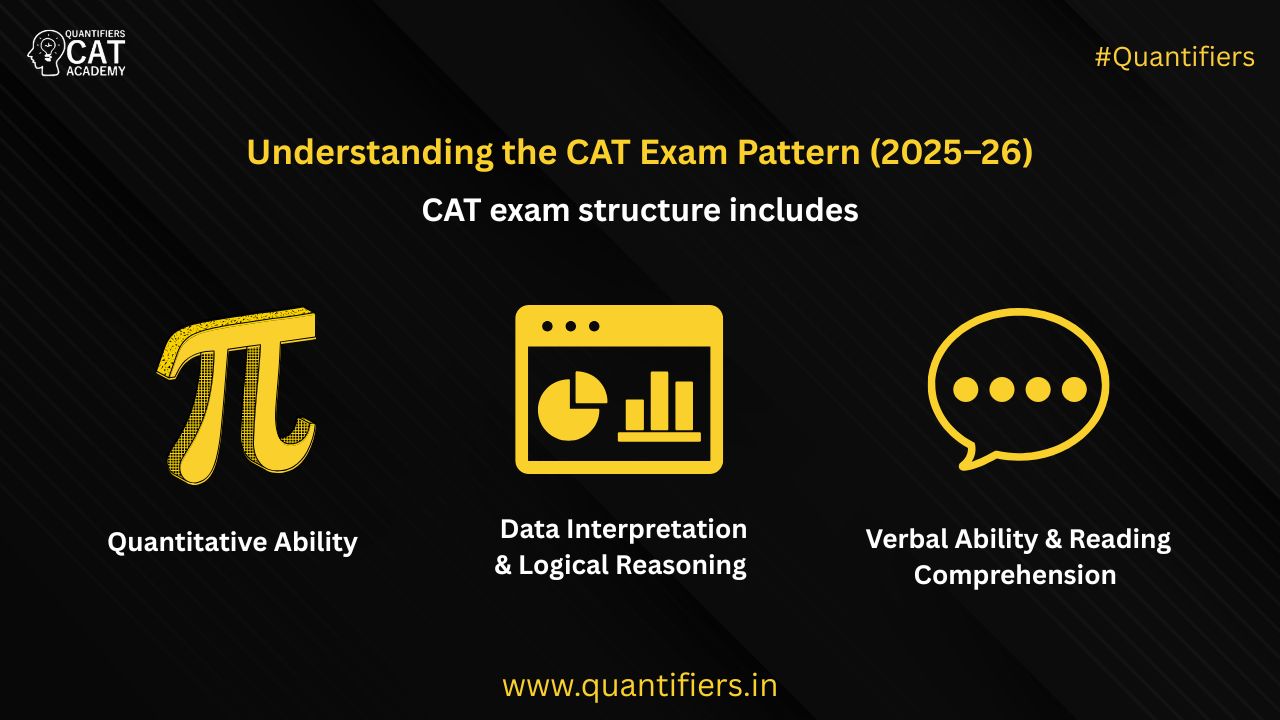
CAT does not require perfection in all sections. A balanced performance with strong accuracy often results in a high percentile.
Non-engineers often underestimate their inherent strengths. Students from humanities backgrounds usually have strong reading and comprehension abilities, which directly help in VARC. Commerce students are comfortable with numbers, percentages, and data interpretation. Even candidates who feel weak in mathematics often excel in logic-based questions.
What matters most in CAT is not how many questions you solve, but how wisely you choose them.
Quantitative Ability is the most feared section for non-engineers, but it is also the most structured and predictable. Unlike VARC and DILR, QA has a well-defined syllabus, making it easier to plan preparation.
Arithmetic alone contributes a significant number of questions every year. Once comfortable, candidates can gradually move to algebra, geometry, and number systems. Regular mock tests and analysis help identify weak areas and improve accuracy.

Your MBA journey doesn’t have to be confusing. At Quantifiers CAT Academy, we mentor students from the ground up—whether you’re preparing for CAT or exploring exams like SNAP, NMAT, CMAT, IIFT and MICAT. With personalised attention, proven strategies and performance-focused guidance, we help you build strong fundamentals, boost accuracy, and stay consistent throughout your preparation journey.
VARC is often the strongest section for non-engineers, but consistent effort is required to maximise scores. Reading regularly helps candidates become comfortable with diverse and abstract topics commonly asked in CAT.
A strong VARC strategy includes:
Understanding the author’s intent, tone, and argument structure is more important than memorising vocabulary or grammar rules.
DILR is often unpredictable and can feel overwhelming during the exam. However, with the right approach, it can become a scoring section.
Solving two to three sets accurately is often enough to achieve a strong percentile in DILR.
A realistic and consistent study plan is crucial, especially for aspirants balancing work or college. Spending four to five focused hours daily is sufficient if used efficiently.
Mock tests should be introduced early and gradually increased in frequency as the exam approaches.

CAT preparation is mentally demanding, and non-engineers may feel discouraged at times. It is important to remember that CAT is a relative exam, and steady improvement matters more than initial scores.
A calm and consistent mindset often makes a significant difference on exam day.

Mock tests play a critical role in CAT preparation, especially for non-engineers. They help build familiarity with the exam interface, improve time management, and reduce anxiety.
Analysing mistakes and refining strategy after every mock leads to steady improvement.
Being a non-engineer is not a disadvantage in CAT. With structured preparation, smart question selection, and consistent mock analysis, non-engineers can score exceptionally well and secure admission to top IIMs and MBA colleges.
For aspirants looking for expert guidance, personalised mentoring, and free counselling, Quantifiers offers comprehensive CAT preparation support through its official platform.
Final cutoffs are usually higher than qualifying cutoffs and vary each year.
CAT preparation is not harder for non-engineers; it is simply different. While engineers may have an initial comfort with mathematics, non-engineers often excel in verbal ability, reading comprehension, and logical reasoning. CAT is a balanced aptitude test, and non-engineers can score equally well by focusing on strengths and preparing quant in a structured manner.
A non-engineer should ideally dedicate around four to five focused hours daily for CAT preparation. This includes practice across all three sections, revision of weak areas, and occasional mock analysis. Consistency matters more than the number of hours studied.
Non-engineers should focus on all three sections, but special attention is required for Quantitative Ability. At the same time, VARC should be treated as a scoring opportunity. A balanced approach ensures sectional cut-offs are cleared while maximising overall percentile.
Yes, non-engineers can crack CAT even without a strong mathematics background. CAT tests aptitude based on school-level concepts. By mastering arithmetic and selecting questions smartly, non-engineers can comfortably clear the quant section without attempting every question.
VARC often feels more comfortable for non-engineers due to stronger reading habits and language exposure. However, it still requires regular practice, especially for reading comprehension accuracy and verbal reasoning questions like para jumbles and summaries.
Non-engineers should prepare DILR by practising a variety of logical reasoning puzzles and data interpretation sets under timed conditions. The key is learning set selection rather than solving every set. Solving two or three correct sets can lead to a high percentile.
Non-engineers should start taking mock tests early in their preparation, ideally by May or June. Initially, one mock every ten to fourteen days is sufficient. As the exam approaches, the frequency should increase to one mock per week with detailed analysis.
Most IIMs encourage academic diversity and award diversity points during the selection process. Non-engineers are often preferred in the final admission stages, provided they clear CAT cut-offs and perform well in interviews and written assessments.
The biggest mistake non-engineers make is being overly afraid of Quantitative Ability and ignoring mock analysis. CAT rewards smart selection and accuracy, not solving all questions. Avoiding quant or skipping analysis can significantly hurt performance.
Quantifiers CAT Academy offers structured guidance, especially for non-engineers struggling with quant concepts or strategy. Expert mentoring, doubt-solving, and mock analysis can shorten the learning curve and improve confidence.
To connect with us, for mentorship and daily test practice
DM us on Instagram or WhatsApp. We reply back 24/7. Get your CAT prep started



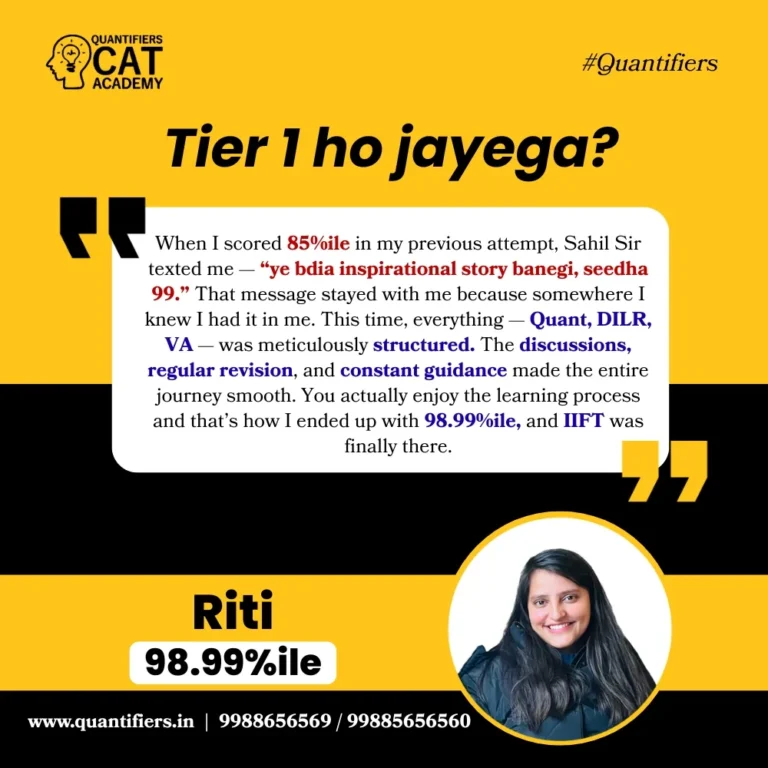
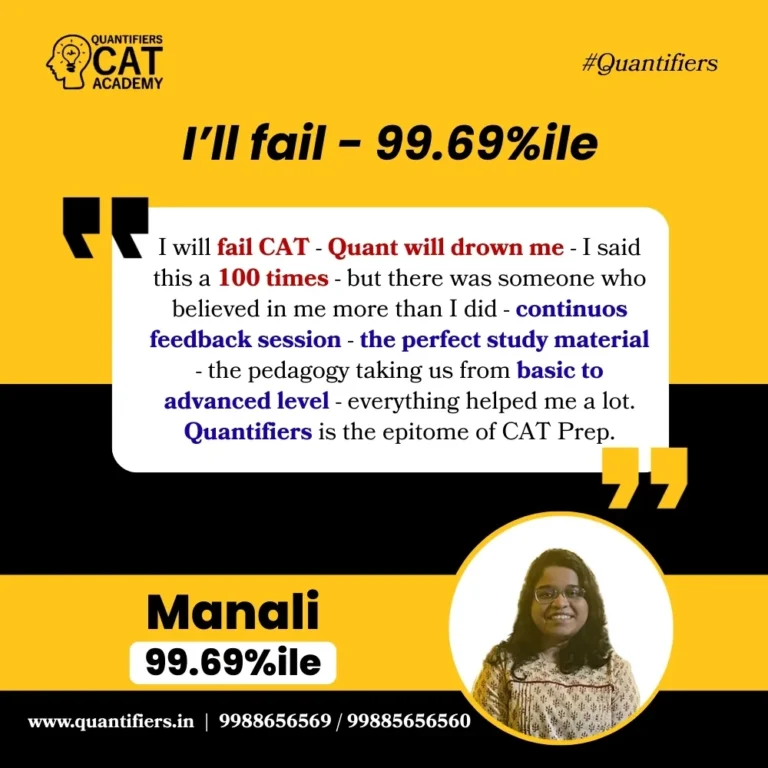
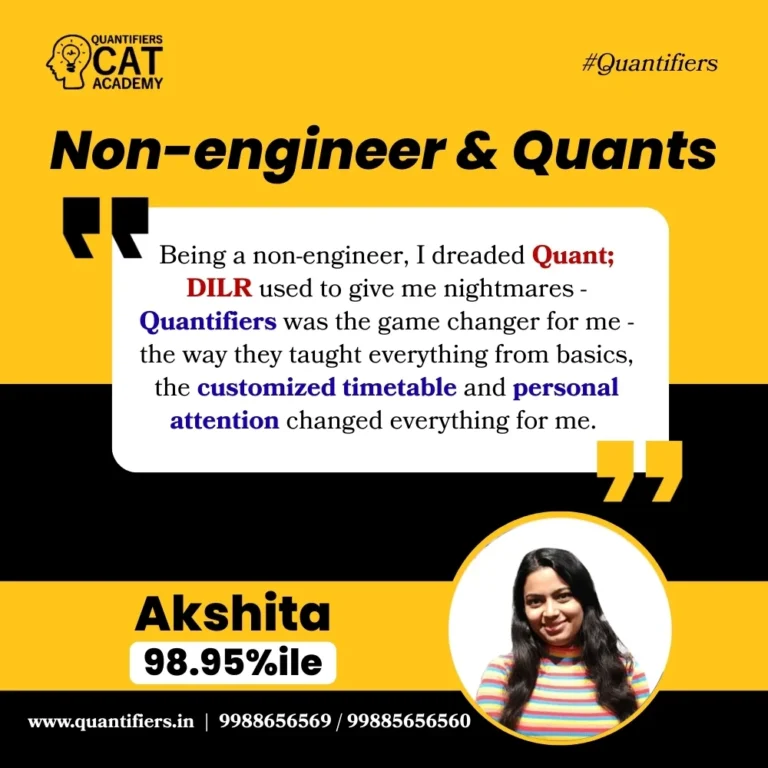
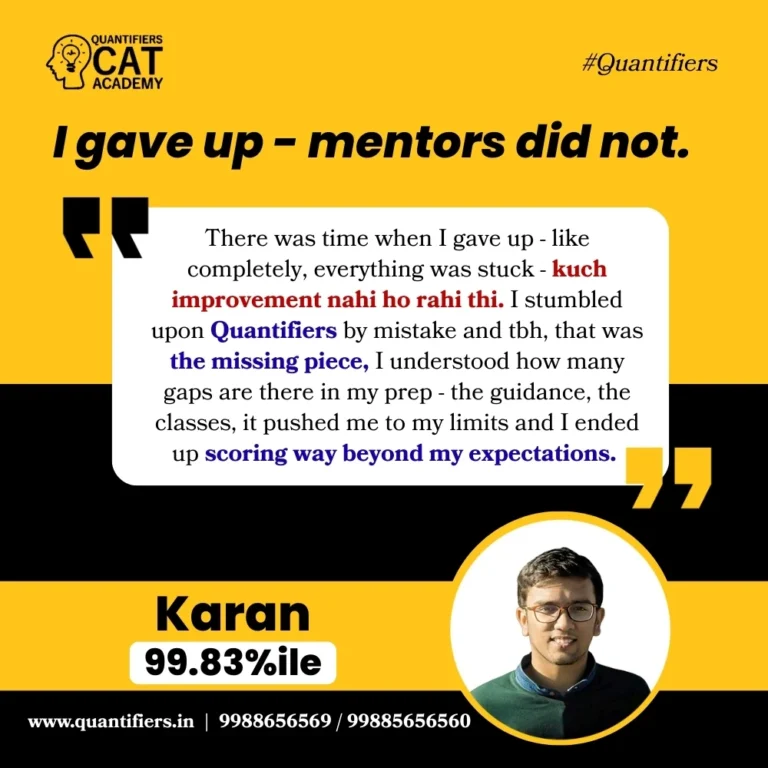

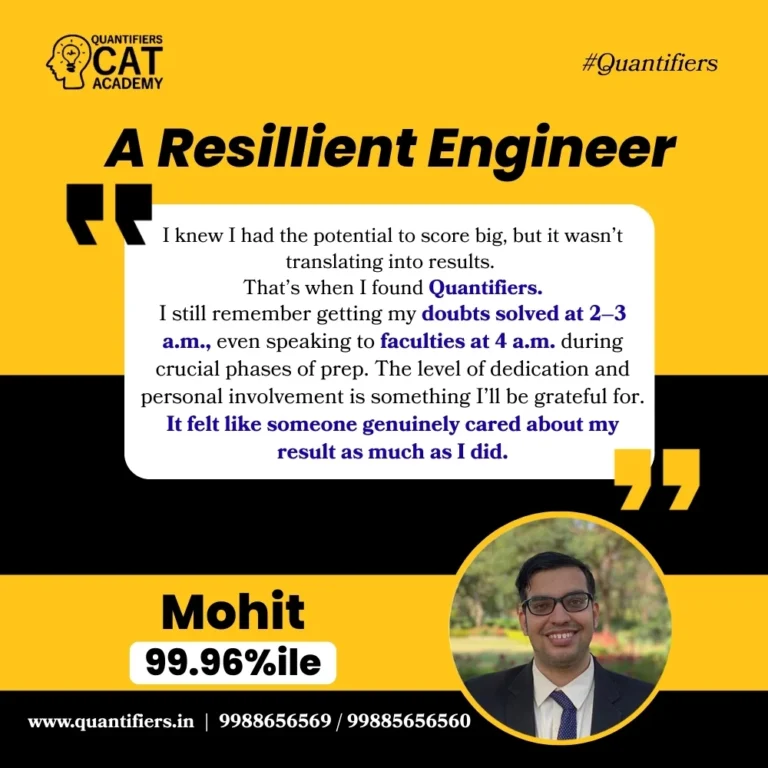






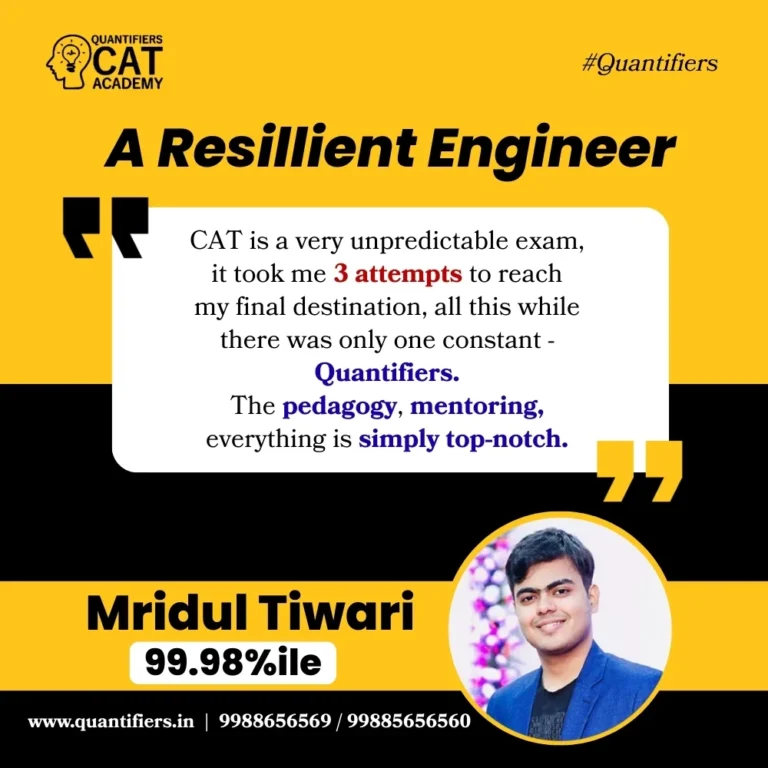

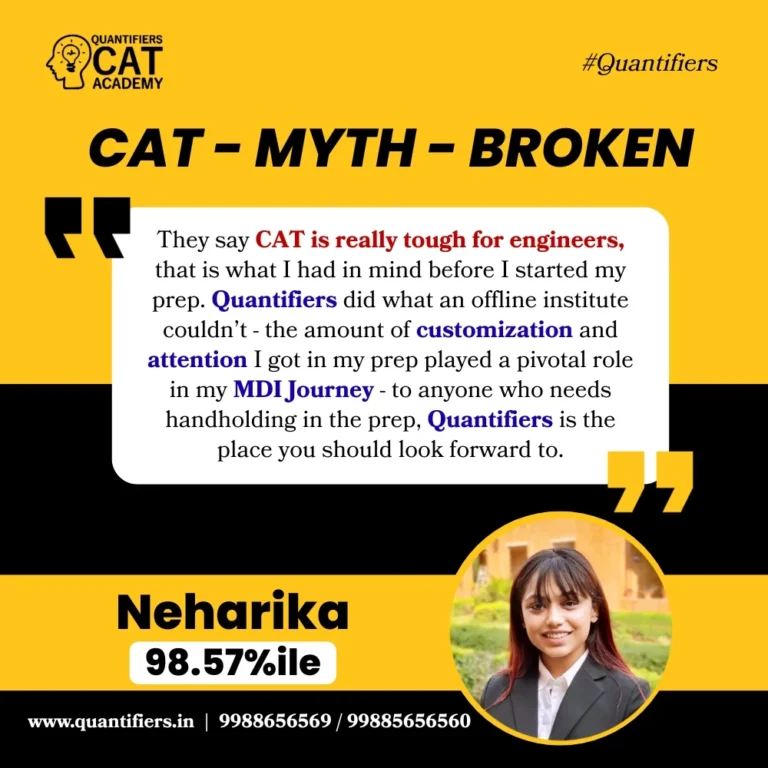

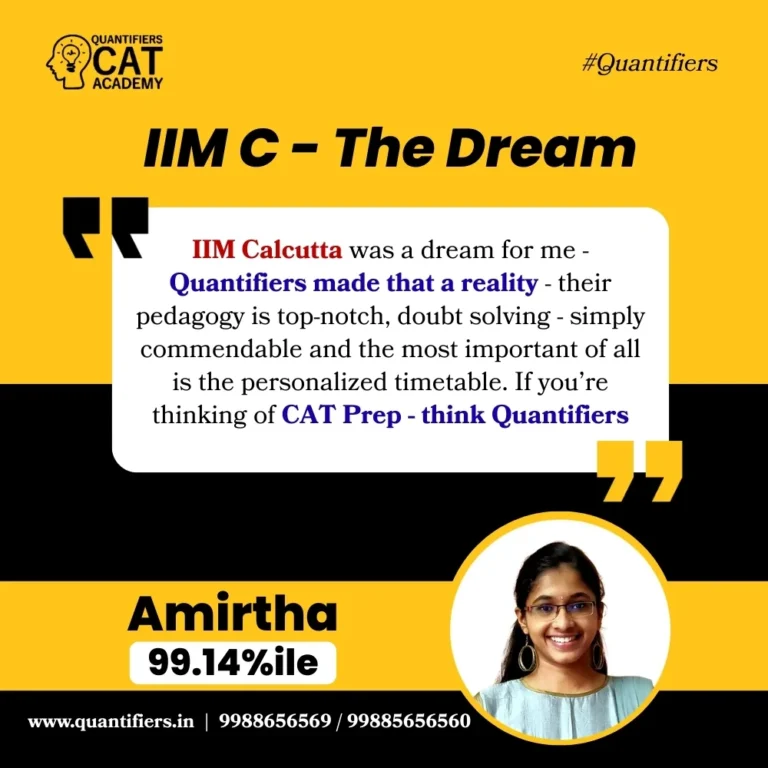



We at Quantifiers understand and deliver on the personal attention each of our students requires. Whether it is through our pedagogy that enables non-engineers or non-math background students, our constant effort to proactively provide solutions, or our focus on our student’s goals.