- Our Courses
- Video Resources
Video Resources
...
- Daily targets
- TruCAT: Free CAT Mock Tests
- Free Study Material
- Blogs
Learn effective WAT tips, common topics, structure, and strategies to crack MBA Written Ability Tests confidently.
Written Ability Test (WAT) is a timed essay-writing round in MBA admissions that evaluates clarity of thought, logical structure, writing ability, and awareness of current issues. Candidates are given one topic and 15–30 minutes to present balanced arguments in clear, structured paragraphs. Strong WAT performance signals managerial thinking and significantly impacts GDPI shortlisting.
We hope you find this blog informational. If you want a FREE DEMO, click here.

Quantifiers CAT Academy, Chandigarh
Let’s address the delusion upfront.
The Written Ability Test (WAT) is not:
It is, unfortunately for procrastinators, a serious elimination tool.
While CAT, XAT, CMAT test how fast you can think, WAT tests how clearly you can think on paper—under time pressure, with zero spellcheck, and no second chances. Welcome to management.
WAT is not a formality — it’s a silent eliminator in MBA GDPI rounds
Tests clarity, logic, structure, and awareness, not fancy English
Topics usually come from current affairs, business, social issues, or abstract themes
Ideal structure = Introduction → 2–3 arguments → balanced conclusion
Planning before writing saves you from half-written disasters
Simple English > vocabulary flex
Extreme opinions, poor grammar, and weak conclusions = instant red flags
Regular news reading + timed practice = unfair advantage
Strong WAT = higher overall GDPI score without saying a word

WAT is a short, timed essay-writing test conducted during MBA selection rounds.
You get:
Topics can be:
The goal isn’t literary genius.
It’s to prove you can think logically, write clearly, and not spiral.
Unlike GDs—where loud people steal oxygen—WAT gives everyone the same space. If you mess it up, that’s entirely on you. Growth opportunity.
Because writing exposes your brain. Ruthlessly.
Through WAT, evaluators check:
Strong writing = structured thinking.
Structured thinking = future manager energy.
This is why WAT quietly carries weight in GDPI scores, even when people pretend it doesn’t.

No one is expecting Shakespeare. Relax.
Maturity beats drama. Always.
Most WAT topics fall into predictable buckets:
Popular examples:
If you read the news even semi-regularly, half the work is done.
Stop overthinking. Use this:
Random idea dumping is not writing. It’s panic in paragraph form.

Here’s a sane strategy:
Writing without planning = unfinished essay + regret.
And yes, leave time to revise. One spelling mistake won’t kill you, but five will start a conversation.
Do these consistently:
Boring advice. Works every time.
Avoid these like they owe you money:
Most WAT disasters are self-inflicted.
Most WAT topics are inspired by ongoing discussions.
You don’t need PhD-level depth.
You need:
Reading news 20 minutes a day is enough to stop blank-page panic.

Each round tests something different.
Cracking WAT strengthens your overall GDPI score and makes your profile look sharper.
Self-practice is fine.
But feedback is faster.
Guided preparation helps you:
At Quantifiers, aspirants get mock WATs, topic-wise strategy sessions, and expert evaluation—so improvement isn’t guesswork.
WAT is not about fancy vocabulary.
It’s about clear thinking under pressure.
With:
Anyone can score well.
Master WAT, and you quietly boost your GDPI performance without saying a word.
That’s power.
WAT (Written Ability Test) is an essay-writing round conducted by B-schools to assess writing skills, clarity of thought, logical reasoning, and awareness of current issues.
Most B-schools provide 15 to 30 minutes, depending on the institute and selection process.
Topics usually include current affairs, business and economy, social issues, technology, education, ethics, or abstract themes.
A good WAT essay is typically 250–350 words, but structure and clarity matter more than word count.
Read newspapers daily, practice writing essays regularly, analyze sample answers, and improve grammar and sentence clarity.
No. Simple, clear, and grammatically correct English is preferred over complex vocabulary.
Evaluation is based on relevance, logical flow, structure, quality of arguments, grammar, and overall clarity.
No. WAT is an essay-writing test and should always be written in paragraph format.
WAT plays a significant role along with GD and PI. A strong WAT score improves overall evaluation.
Not mandatory, but expert guidance from Quantifiers CAT Academy can help improve structure, topic analysis, and confidence through feedback.
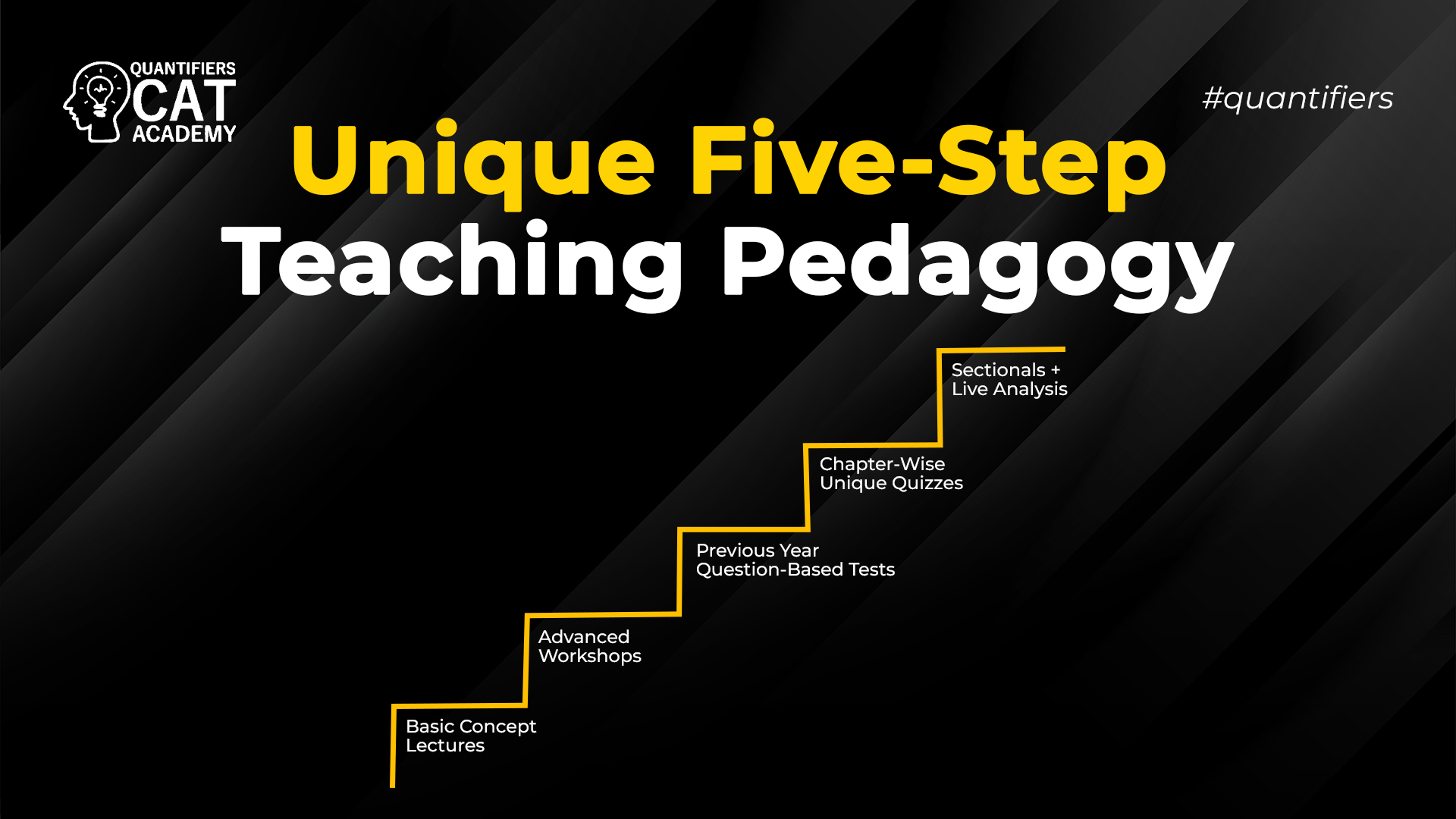
Your MBA journey doesn’t have to be confusing. At Quantifiers CAT Academy, we mentor students from the ground up—whether you’re preparing for CAT or exploring exams like SNAP, NMAT, CMAT, IIFT and MICAT. With personalised attention, proven strategies and performance-focused guidance, we help you build strong fundamentals, boost accuracy, and stay consistent throughout your preparation journey.
To connect with us, for mentorship and daily test practice
DM us on Instagram or WhatsApp. We reply back 24/7. Get your CAT prep started


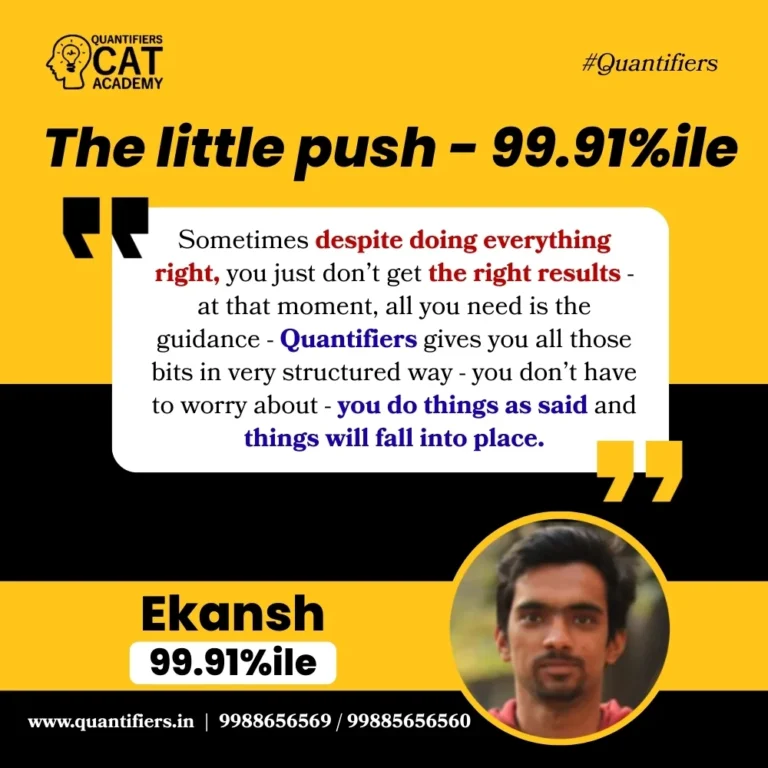

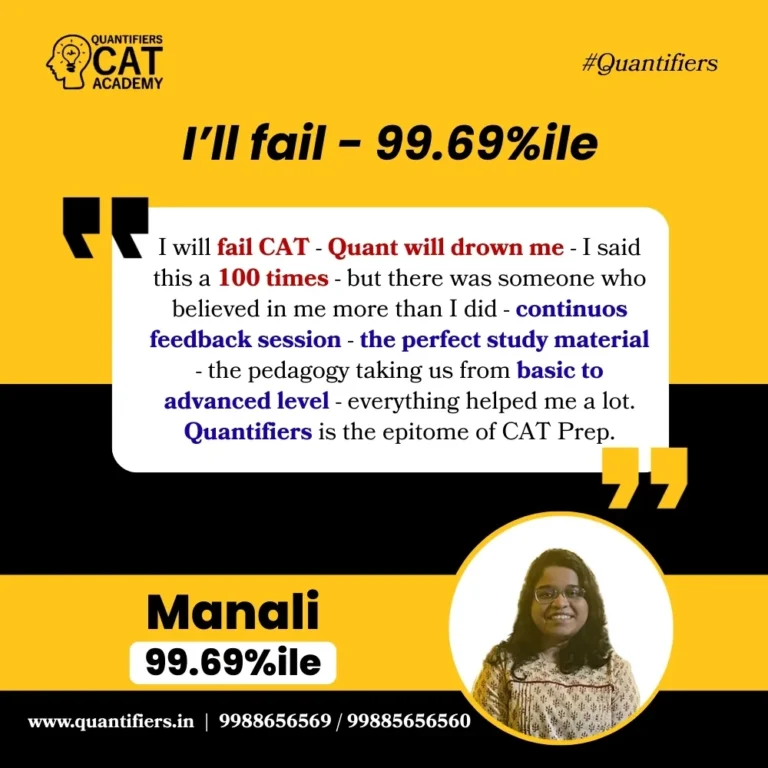
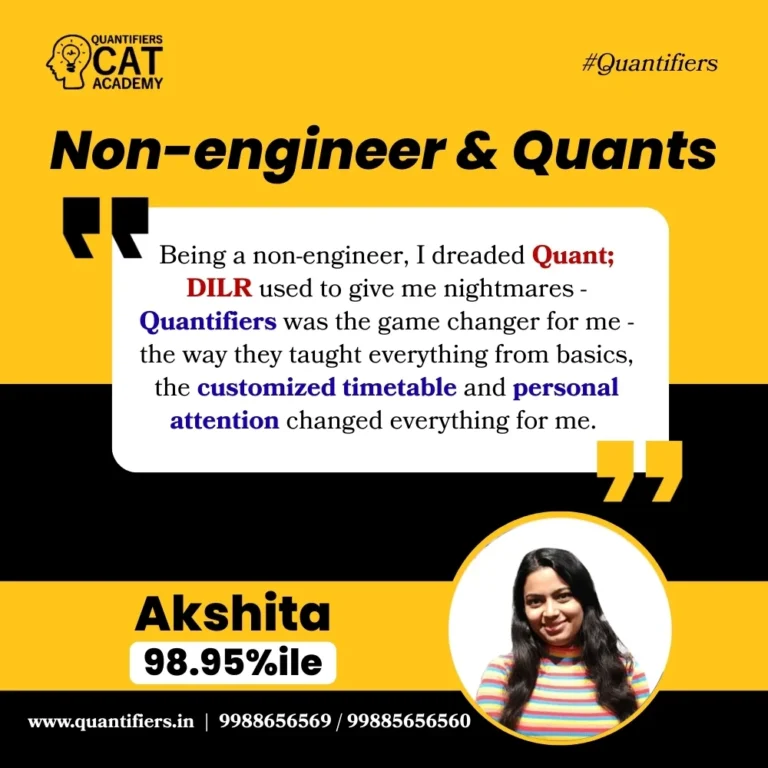
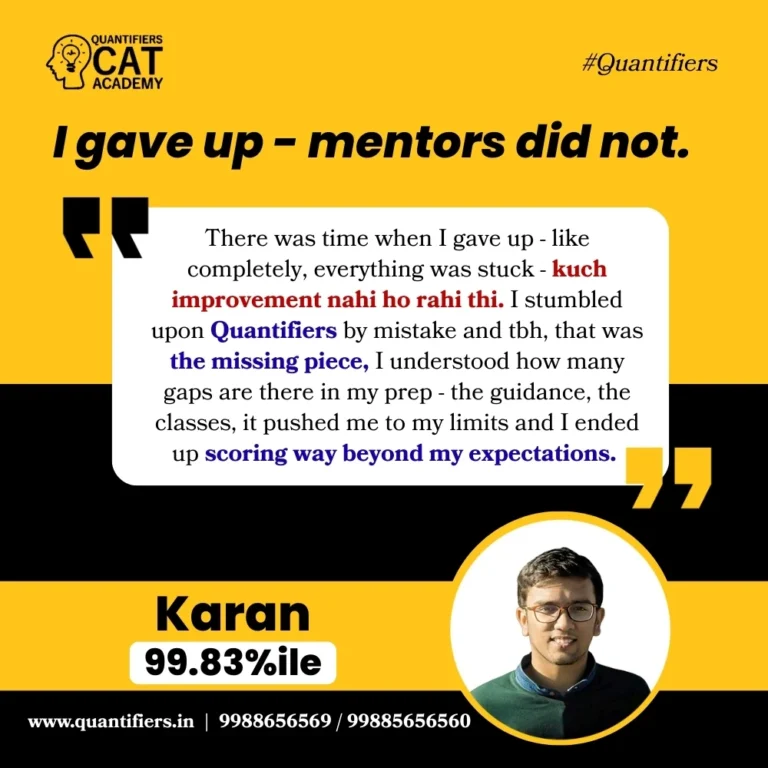

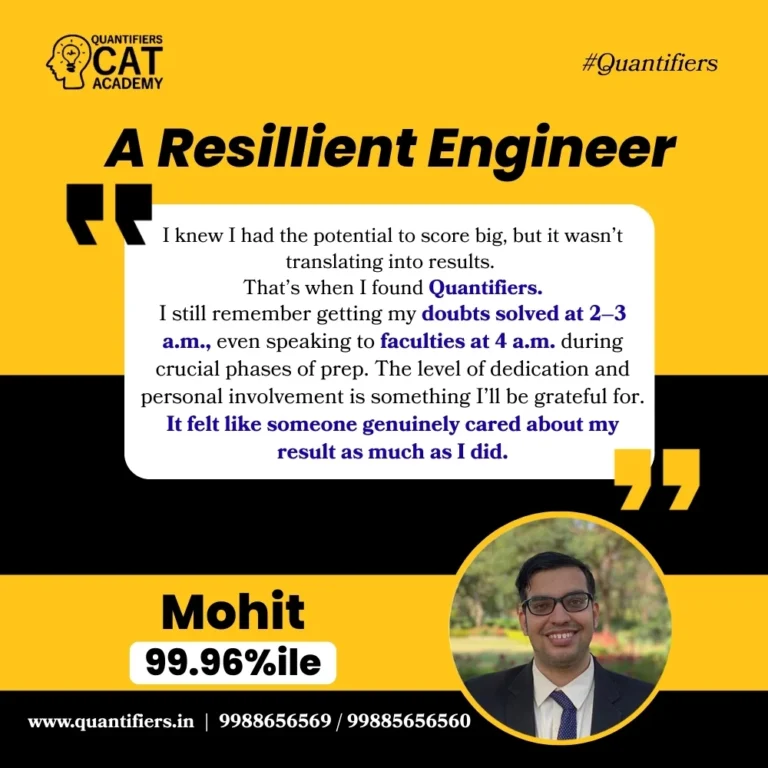
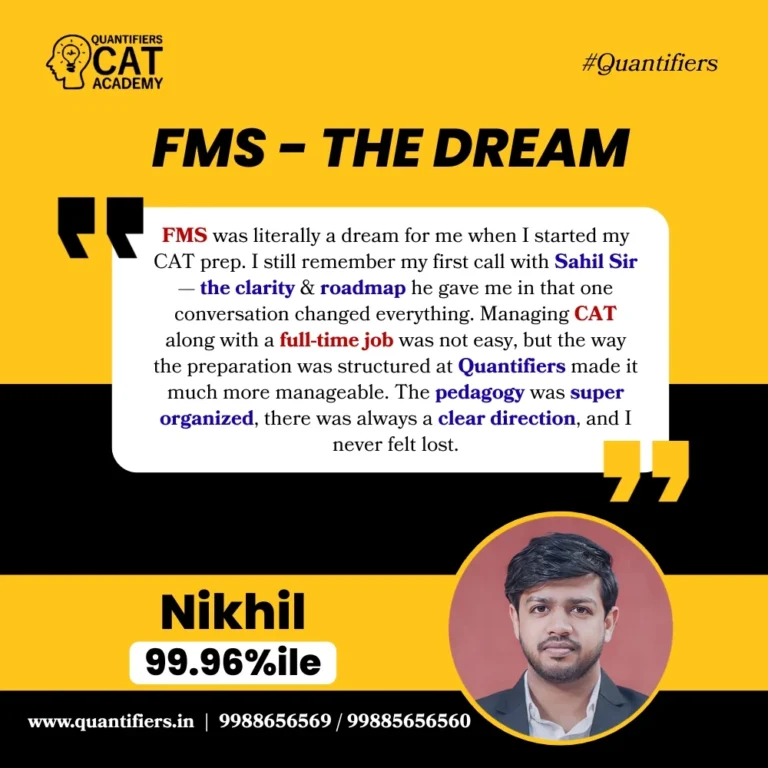






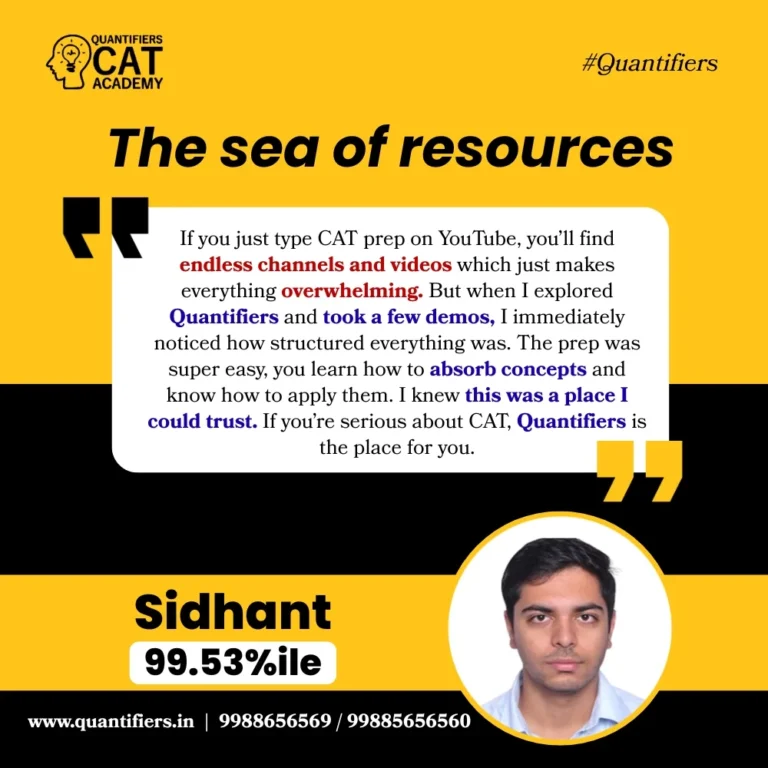
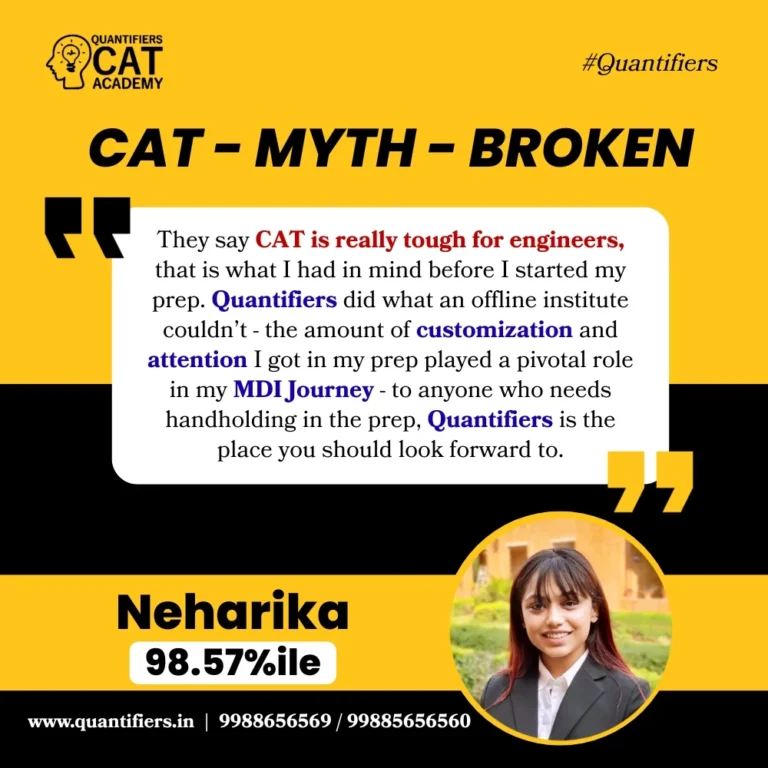





We at Quantifiers understand and deliver on the personal attention each of our students requires. Whether it is through our pedagogy that enables non-engineers or non-math background students, our constant effort to proactively provide solutions, or our focus on our student’s goals.