Hi IIM Aspirant! What Are You Looking For?
 Explore IPMAT
 Explore CAT

CAT 2026 Preparation plan starting February: 600-hour strategy, mock roadmap & study phases to target 99+ percentile.
CAT 2026 Preparation starting in February gives you a 10–12 month runway to build fundamentals, complete 600+ structured study hours, and refine mock strategy for a 99+ percentile. Begin with concept clarity (Quant, VARC, DILR), gradually introduce sectional tests by August, and move to full-length mocks by September after 60–70% syllabus coverage. Consistent practice, 400+ DILR sets, strong VARC reading habits, and deep mock analysis are the real differentiators — not last-minute hustle.
We hope you find this blog informational. If you want a FREE DEMO, click here.

Quantifiers CAT Academy, Chandigarh
Let’s say this clearly.
If you’re starting CAT 2026 preparation in February, you’re not early.
You’re strategic.
Most aspirants:
You?
You’re about to build a 600-hour advantage.
And CAT respects hours more than hype.
If you’re starting CAT 2026 Preparation in February, here’s your blueprint:
Target 600 structured hours (Feb–Nov)
Feb–July = Build concepts + reading stamina
Solve 400+ DILR sets before exam day
Strengthen Quant basics before speed practice
Read daily for VARC (screen-based practice only)
Start sectionals after 60–70% syllabus coverage
Begin full mocks around September
Spend 2–3 hours analyzing every mock
Develop question selection & letting-go ability
Consistency > motivation. Structure > chaos
600 focused hours beats 3 months of panic prep. Every single time.
Here’s the math nobody romanticizes.
If you study:
You cross 600 focused hours.
Not motivational nonsense.
Structured repetition.
And 600 structured hours beats 3 months of panic-mode solving.
If you struggle with consistency, start using Daily Targets by Quantifiers to track and lock your routine early. Discipline > dopamine.
If you’re starting your CAT 2026 prep from February, this video is your perfect roadmap. It breaks down how to structure your preparation month-by-month, what to prioritise in the early phase, and how to build strong fundamentals before mocks begin. Watch this to start smart, stay ahead, and maximise your CAT 2026 score.
This is where average aspirants skip steps.
This phase is about:
If your basics are weak, mocks will expose you brutally later.
Start with:
Don’t “watch and move on.” Practice aggressively.
Use:
These aren’t “extra resources.”
They’re your repetition engine.
Concept → Practice → Reinforce → Repeat.
If your Quant basics are shaky, begin with the Free Basics QA Course by Quantifiers CAT Academy before jumping into advanced sets.

VARC is not about vocabulary flexing.
It’s about thinking.
Score leverage trend (approximate):
VARC can lift your overall percentile faster than most people realize.
From February:
Once comfortable, start testing yourself using structured Verbal Ability Tests to measure accuracy and elimination strength.
VARC is built slowly.
There is no hack.
DILR doesn’t reward intelligence.
It rewards familiarity.
From February:
And yes — if you’re serious about 99 percentile, you must aim for volume.
Use the Ultimate DILR Book with 400+ Sets as your structured practice base instead of randomly googling sets.
If you need conceptual clarity before practice, go through the Basic Essentials of LRDI Course to build your logical foundation properly.
DILR punishes ego.
It rewards repetition.

Now we transition from learning to execution.
This is where percentile jumps happen.
You start:
But don’t start full mocks randomly.
Before 60–70% syllabus coverage:
No full mocks.
After coverage:
Introduce sectionals.
Then move to full mocks around September.
Use CAT Free Mocks by Quantifiers to simulate exam pressure early without overcommitting.
And don’t just attempt mocks — analyze them.
Spend 2–3 hours analyzing:
If you’re not analyzing, you’re hobby prepping.

If you lose consistency midway, consider sticking to structured game plans like our Daily Targets instead of self-sabotaging silently.
Letting go.
You cannot solve everything.
You should not attempt everything.
High percentile aspirants:
This skill only develops through structured mock exposure and feedback.

Consistency plays a crucial role in CAT 2026 preparation. To help aspirants stay disciplined and exam-ready, we post daily study targets covering Quant, DILR, and VARC practice.
Can you crack CAT 2026 without coaching?
Yes.
Will most aspirants structure 600 hours optimally on their own?
No.
Common self-prep problems:
Structure reduces chaos.
And chaos kills percentiles.
At Quantifiers, preparation isn’t random content dumping.
It’s layered progression.
What that actually means:
Not just lectures.
An ecosystem.
Free resources give you momentum.
Structured batches give you acceleration.
If you’re starting in February, this is the ideal time to join a full ecosystem instead of correcting mistakes in September.

You don’t lose percentile because you’re dumb.
You lose it because:
Replace:
Reels → Reading
Scrolling → Practice
Chaos → Deep work blocks
Consistency beats motivation.
Every single time.
If you start in February:
✔️ You can build fundamentals properly
✔️ You can practice enough
✔️ You can experiment with strategy safely
✔️ You can avoid last-minute panic
But only if you stay consistent.
600 structured hours > 3 months of emotional hustle.
Start now.
Build smart.
Use free resources strategically.
And if you want a structured roadmap, mentorship, analytics, and real-time performance correction, plug into the full CAT 2026 batch at Quantifiers before panic season begins.
Because CAT rewards execution.
And execution rewards structure.
No. February provides a 10–12 month runway to build fundamentals, practice strategically, and refine mock performance without panic.
Approximately 600 focused hours with consistent practice and detailed mock analysis.
After completing 60–70% of your syllabus. For February starters, this usually means beginning around September.
Serious aspirants aiming for 99 percentile should solve 400+ high-quality sets before the exam.
It varies yearly, but roughly 30–35 marks in Quant can correspond to 99 percentile depending on difficulty.
Yes. VARC often offers stronger score-to-percentile conversion compared to DILR and Quant.
Yes, if you are disciplined and structured. However, guided preparation reduces confusion and improves execution.
Losing consistency by mid-year. Sustainable effort matters more than early enthusiasm.
Extremely important. Mock analysis identifies conceptual gaps, time mismanagement, and poor question selection.
A structured ecosystem with curated resources, mock analysis, and mentorship is available through Quantifiers CAT Academy.
Starting CAT 2026 preparation in February allows aspirants to distribute 600+ focused study hours across three structured phases:
To score 99+ percentile:
Early starters gain flexibility, reduced burnout risk, and better percentile conversion through structured preparation rather than last-minute intensity.
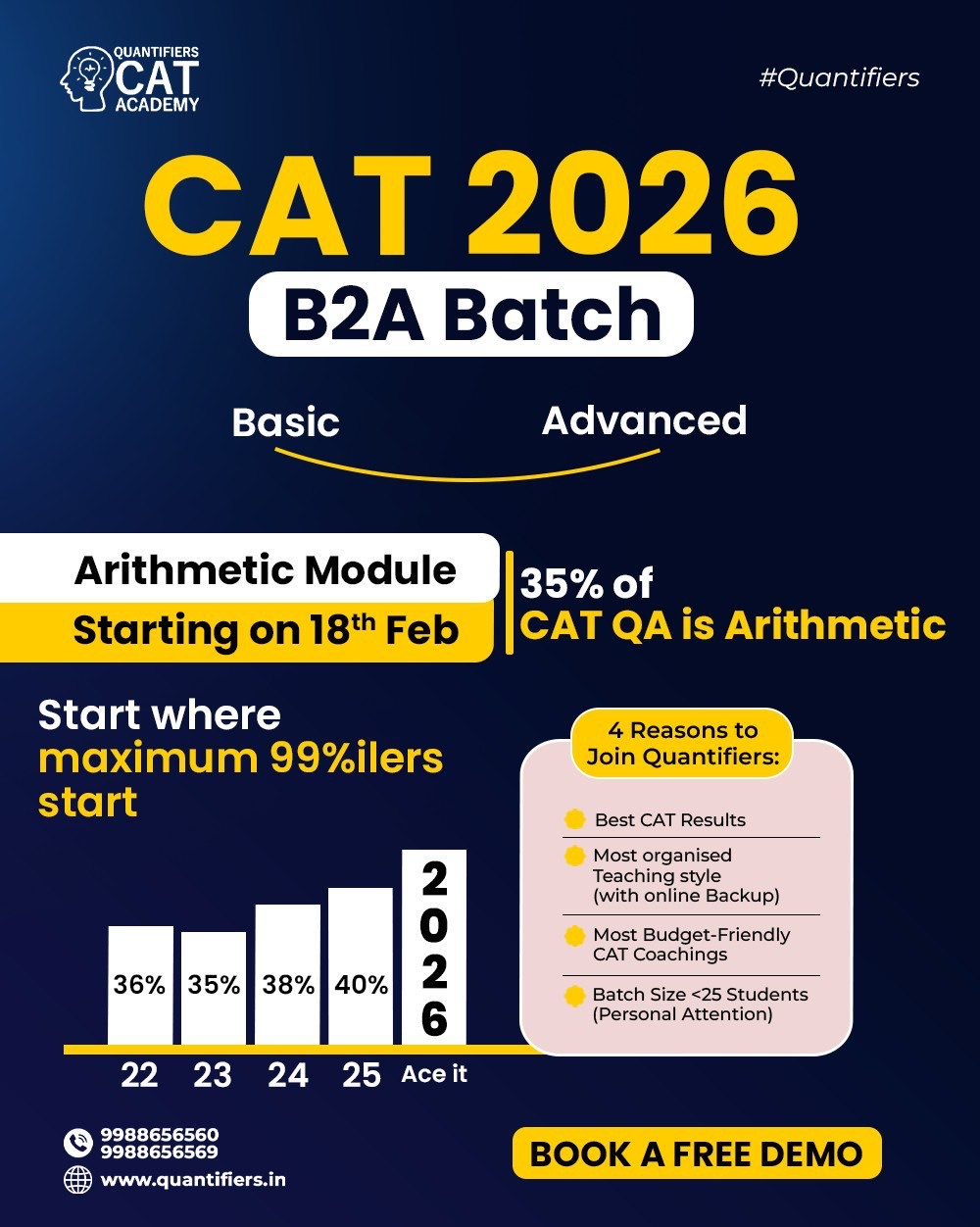
Starting your CAT 2026 preparation? Our B2A Batch at Quantifiers CAT Academy is designed to take aspirants from basic concepts to advanced problem-solving, with a strong focus on CAT Quantitative Aptitude.
To connect with us, for mentorship and daily test practice
DM us on Instagram or WhatsApp. We reply back 24/7. Get your CAT prep started


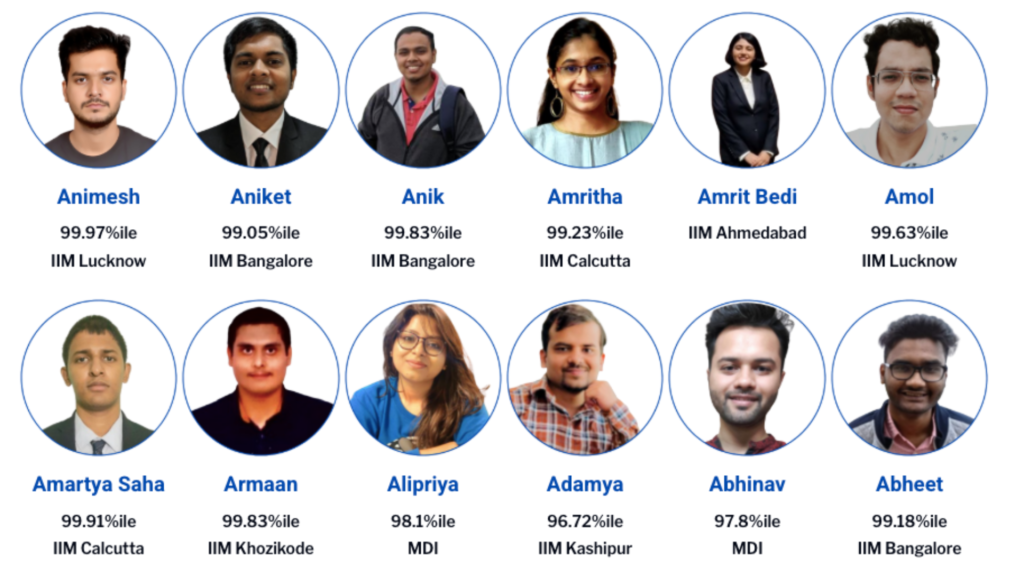

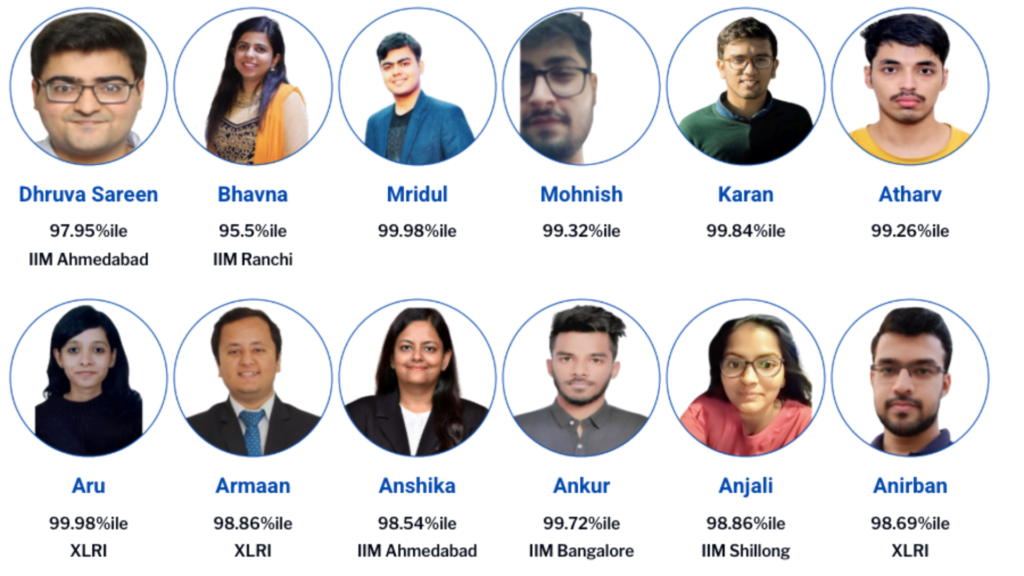



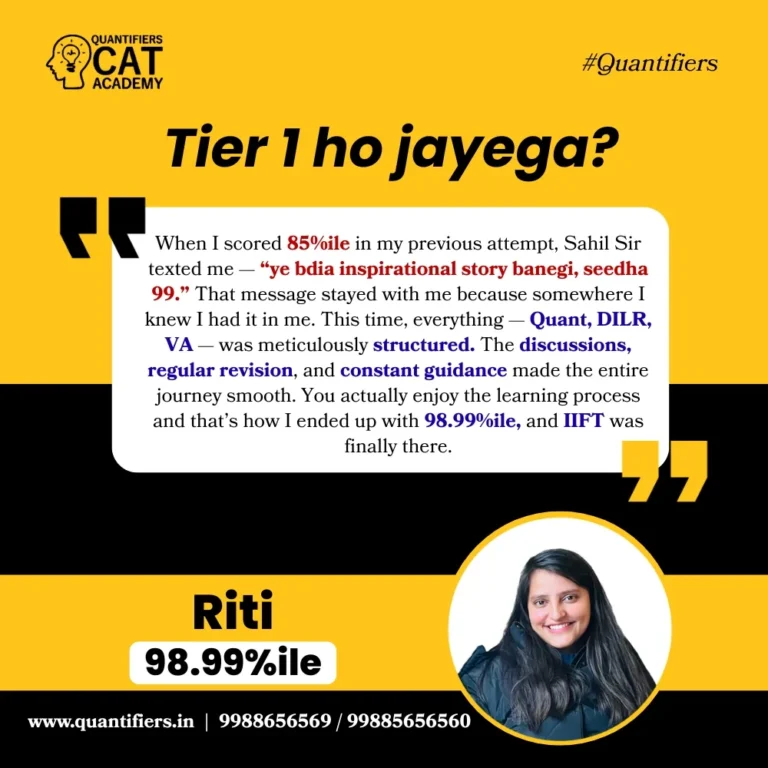




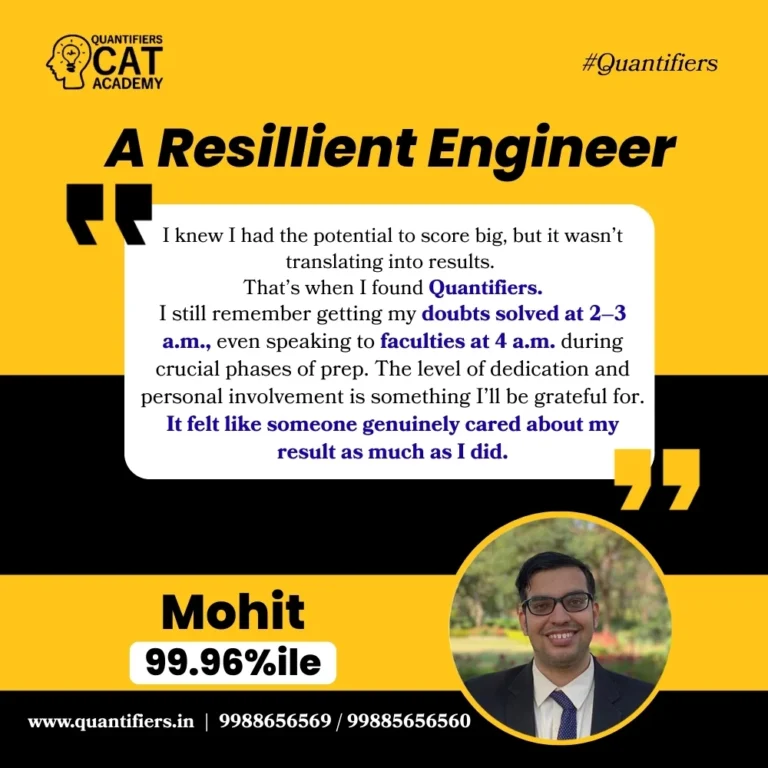

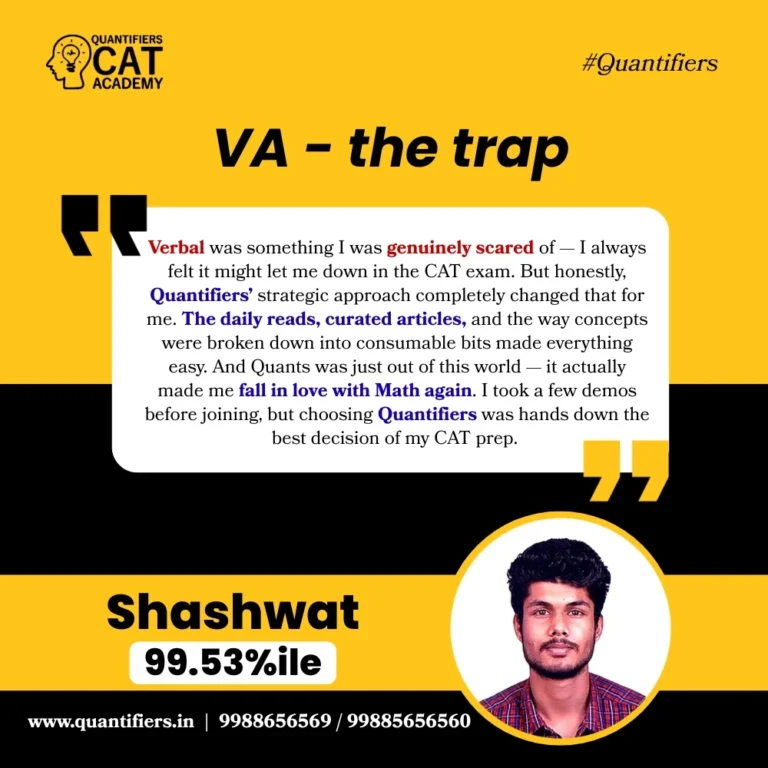












We at Quantifiers understand and deliver on the personal attention each of our students requires. Whether it is through our pedagogy that enables non-engineers or non-math background students, our constant effort to proactively provide solutions, or our focus on our student’s goals.