




Home » CAT 2026: Understanding MBA ROI and How to Maximise Returns
Learn how to evaluate MBA ROI for CAT 2026. Understand costs, salary returns, and strategies to maximise your MBA investment and career growth.
MBA ROI for CAT 2026 refers to evaluating whether the total investment in an MBA—such as tuition fees, living expenses, and time—leads to strong career returns like high salary packages, career growth, and industry exposure. Aspirants should compare college fees with placement outcomes, consider long-term benefits like networking and skills, and aim for high CAT scores to secure admission into institutes that offer the best balance between cost and returns.
We hope you find this blog informational. If you want a FREE DEMO, click here.

Quantifiers CAT Academy, Chandigarh
Preparing for the CAT 2026 exam is more than just securing admission into a reputed MBA college. It is also about making a smart investment in your future career. One of the most important concepts every MBA aspirant should understand is Return on Investment (ROI).
ROI helps students evaluate whether the time, money, and effort invested in an MBA program will generate strong career returns. With MBA fees increasing every year, understanding ROI becomes extremely important for aspirants planning their management journey.
At Quantifiers, we guide CAT aspirants not only in exam preparation but also in making informed MBA decisions that lead to better career outcomes.
MBA ROI = Fees + Expenses vs Salary + Career Growth
Don’t chase only college brand—chase value
Some low-fee colleges (FMS, DSE, JBIMS) offer insane ROI
Always check average CTC, not highest package
Factor in hidden costs (hostel, lifestyle, networking)
ROI is not just money → skills, exposure, network matter
A higher CAT percentile = better colleges = higher ROI
Scholarships = ROI booster
Right specialization = salary multiplier
Smart decision = good college now vs drop year gamble
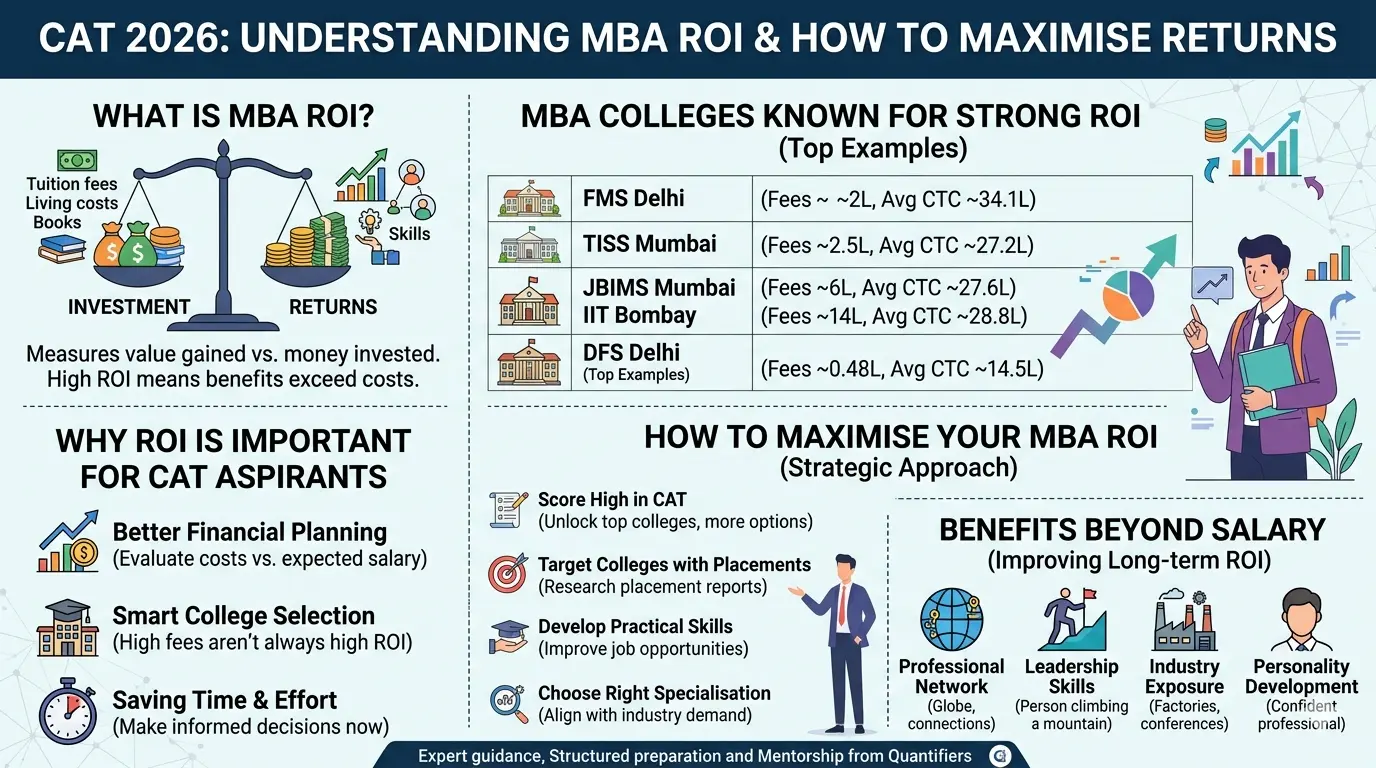
ROI, or Return on Investment, simply measures how much value you gain compared to the money you invest.
For an MBA student, the investment includes:
The returns can include:
A high ROI means that the benefits and earnings from your MBA significantly exceed the total investment made during the course.

Many students focus only on getting admission into a popular college without analysing whether the program provides strong returns. Understanding ROI can help aspirants make better career decisions.
MBA programs require significant financial commitment. Evaluating ROI helps you understand whether the expected salary justifies the cost of the degree.
Sometimes a college with slightly lower rankings but reasonable fees and strong placements may offer better ROI than expensive institutes.
Some students prefer joining a good college immediately rather than spending another year preparing for CAT. Understanding ROI helps in making this decision wisely.
Before calculating ROI, aspirants must understand the total expenses involved in pursuing an MBA.
This is usually the biggest part of MBA expenses and includes:
Students studying away from home may incur additional expenses such as:
MBA life also involves several additional costs like:

Discover the most complete list of free resources for CAT 2026 — from free CAT mock tests and CAT previous year questions to DILR sets, VARC practice, quant formula book, and GDPI handbooks. All curated by Quantifiers. All free. All updated.
While salary is a major return, MBA programs also provide many long-term benefits.
These benefits often contribute significantly to long-term career growth.

Some MBA institutes in India offer excellent ROI because of reasonable fees and strong placement records.
MBA College | Approx Fees (Lakhs) | Average CTC (Lakhs) |
FMS Delhi | 2 | 34.1 |
TISS Mumbai | 2.5 | 27.22 |
IIT Bombay | 14 | 28.88 |
JBIMS Mumbai | 6 | 27.6 |
IIT Delhi | 10 | 25.8 |
IIT Kharagpur | 11.5 | 22.13 |
IIT Madras | 11 | 20.19 |
DFS Delhi | 0.48 | 14.55 |
DSE Delhi | 0.48 | 14.50 |
SIMSREE Mumbai | 1.5 | 12.30 |

You may know the answer, but if you cannot express it clearly, the impact reduces.
Panelists look for:
These skills require practice and mock interviews.
To get the maximum return from your MBA investment, aspirants should follow a strategic approach.
A higher percentile increases your chances of getting admission into top MBA colleges with strong placement packages.
Always evaluate colleges based on placement reports, industry exposure, and alumni success.
Many institutes offer scholarships and financial aid that can significantly reduce your total MBA cost.
During your MBA journey, focus on building communication, analytical, and leadership skills to improve job opportunities.
Selecting a specialisation aligned with industry demand can significantly increase career growth and salary potential.
At Quantifiers, students receive expert guidance, structured preparation strategies, and mentorship to achieve high CAT scores and secure admission into top MBA colleges.

Consistency plays a crucial role in CAT 2026 preparation. To help aspirants stay disciplined and exam-ready, we post daily study targets covering Quant, DILR, and VARC practice.
Understanding ROI in an MBA helps aspirants make smarter decisions regarding their education and career. Instead of focusing only on rankings or brand names, students should evaluate fees, placements, career growth, and overall learning opportunities.
With the right preparation strategy and proper guidance, CAT 2026 aspirants can maximise their MBA returns and build a successful management career.
ROI (Return on Investment) in an MBA refers to the comparison between the total cost of the MBA program and the financial and career benefits gained after graduation, such as salary packages, career growth, and professional opportunities.
ROI helps CAT aspirants evaluate whether pursuing an MBA from a particular college is financially worthwhile. It allows students to compare tuition fees, placement packages, and long-term career opportunities before choosing an MBA program.
MBA ROI is usually calculated by comparing the total cost of the MBA program (fees, living expenses, and other costs) with the average salary offered during campus placements after graduation.
GDPI stands for Group Discussion and Personal Interview. It is conducted after the CAT exam to evaluate a candidate’s communication skills, leadership potential, analytical thinking, and personality fit for management programs.
No, higher fees do not always guarantee better ROI. Some colleges with moderate fees and strong placement records often provide better returns compared to expensive institutes with similar salary packages.
Students can maximise their MBA ROI by scoring high in CAT, selecting colleges with strong placements, applying for scholarships, and developing practical management skills during the MBA program.
The major expenses in an MBA include tuition fees, hostel or accommodation charges, living expenses, study materials, and additional costs like events, networking activities, and internships.
Yes, non-financial benefits such as networking opportunities, industry exposure, leadership development, and skill enhancement play a crucial role in long-term career success after an MBA.
Yes, a high CAT percentile increases the chances of getting admission into top MBA colleges with better placements and lower fees, which ultimately improves the overall ROI of the MBA program.
Quantifiers provides expert mentorship, structured CAT preparation strategies, and guidance on selecting the right MBA colleges, helping aspirants achieve high CAT scores and maximise their MBA return on investment.

Your MBA journey doesn’t have to be confusing. At Quantifiers CAT Academy, we mentor students from the ground up—whether you’re preparing for CAT or exploring exams like SNAP, NMAT, CMAT, IIFT and MICAT. With personalised attention, proven strategies and performance-focused guidance, we help you build strong fundamentals, boost accuracy, and stay consistent throughout your preparation journey.
CAT 2026 ROI (Return on Investment) helps MBA aspirants evaluate whether the cost of an MBA—tuition fees, living expenses, and time—is justified by career outcomes like salary packages, job roles, and long-term growth.
To assess MBA ROI effectively:
Compare total program cost vs average placement salary
Analyse placement reports, not just rankings
Consider long-term benefits like networking, skills, and industry exposure
Identify colleges with low fees but strong placements (e.g., FMS, JBIMS, DSE)
Improve ROI by scoring high in CAT, choosing the right specialization, and applying for scholarships
A good MBA ROI is achieved when the financial and career returns significantly exceed the total investment, making your MBA a smart long-term career decision.
To connect with us, for mentorship and daily test practice
DM us on Instagram or WhatsApp. We reply back 24/7. Get your CAT prep started


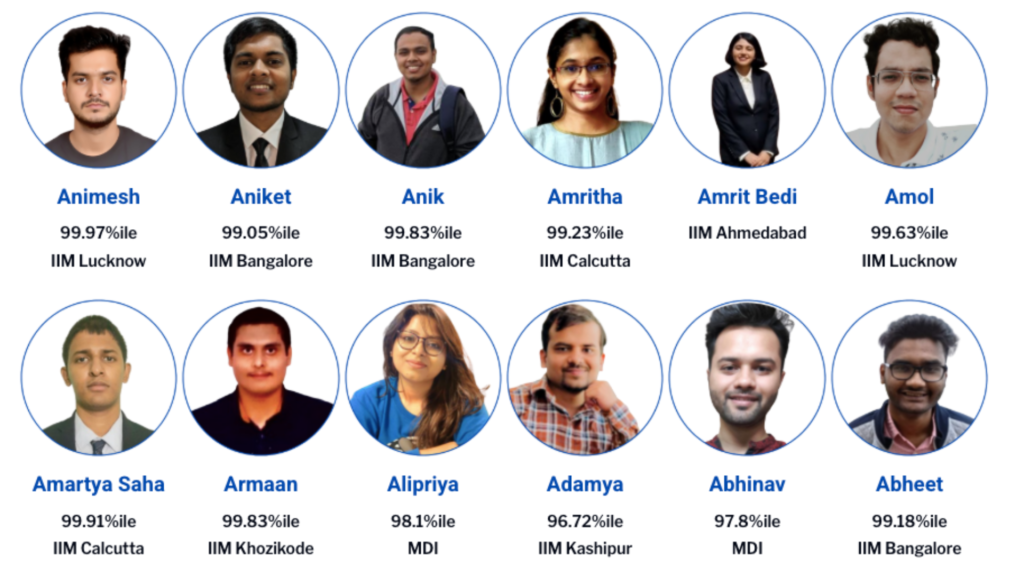
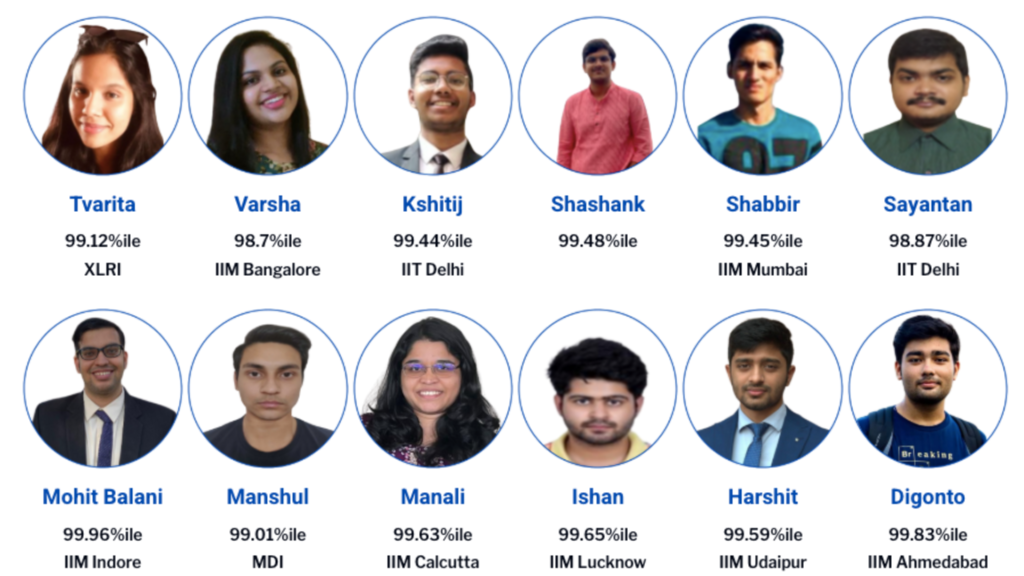
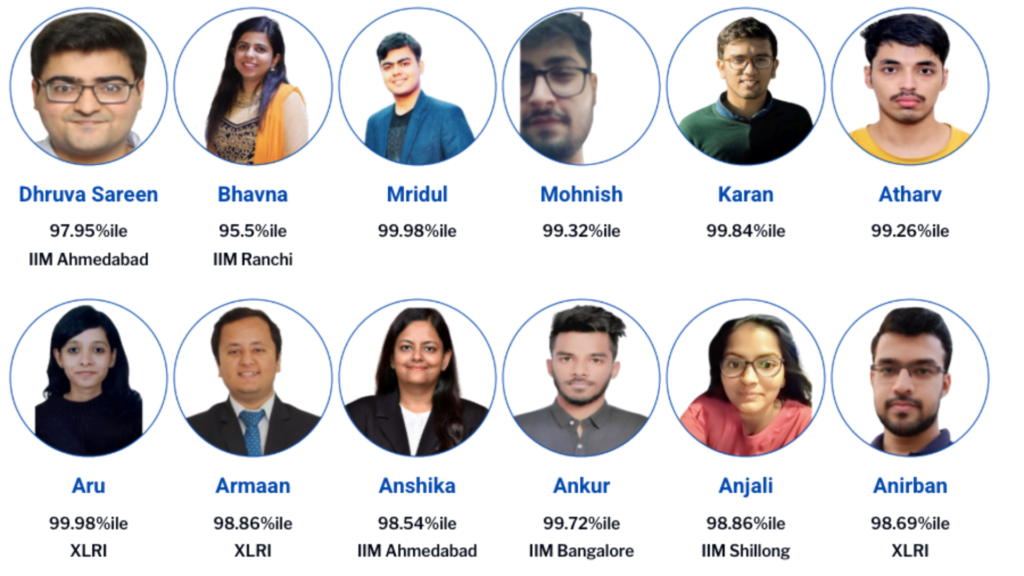























We at Quantifiers understand and deliver on the personal attention each of our students requires. Whether it is through our pedagogy that enables non-engineers or non-math background students, our constant effort to proactively provide solutions, or our focus on our student’s goals.