Hi IIM Aspirant! What Are You Looking For?
 Explore IPMAT
 Explore CAT

CAT VARC Strategy 2026: Learn how to stop guessing in VARC and build consistent scores with smart reading habits, RC trap analysis, VA patterns, and mock strategy. Fix VARC the right way.
CAT VARC Strategy 2026 focuses on improving reading habits, logical elimination, and disciplined mock analysis rather than vocabulary or guesswork. A strong VARC strategy requires daily reading, understanding author arguments, avoiding assumption-based answers, and prioritising accuracy over attempts in RC and Verbal Ability questions. When aspirants read consistently, stay strictly text-based while solving questions, and analyse mistakes after mocks, VARC becomes predictable and scoring instead of confusing.
We hope you find this blog informational. If you want a FREE DEMO, click here.

Quantifiers CAT Academy, Chandigarh
Let’s get one uncomfortable truth out of the way.
If VARC (Verbal Ability & Reading Comprehension) is your weakest CAT section, it’s not because:
It’s because VARC exposes weak thinking habits brutally.
And unlike Quant or LRDI, you can’t “formula” your way out of it.
The good news?
VARC is not talent-based. It is habit-based. Which means it’s fixable—if you prepare correctly.
This blog breaks down a real, practical CAT VARC strategy for 2026—especially for aspirants who are confused, inconsistent, or tired of scoring randomly.
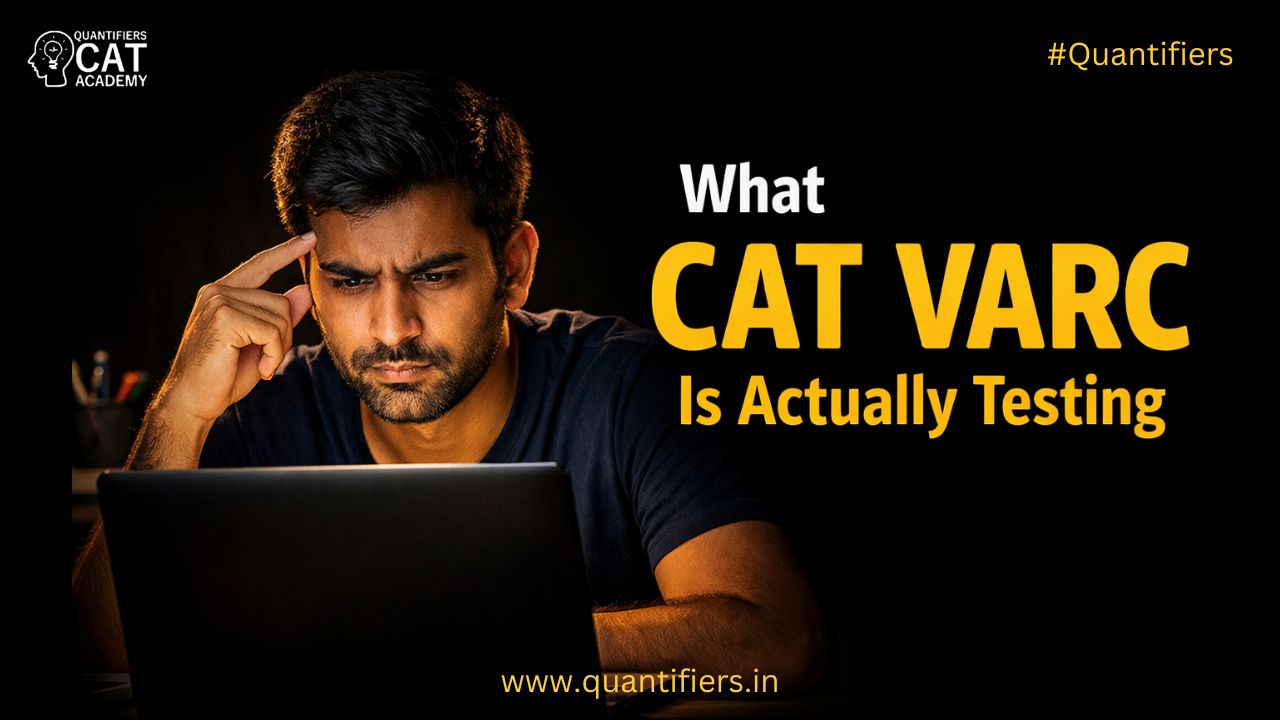
VARC is not about vocabulary; it tests logical reading and argument understanding.
Daily reading (20–30 minutes) of editorials and opinion pieces is non-negotiable.
Focus on eliminating wrong options, not just choosing the right one.
RC accuracy matters more than attempting every passage.
Verbal Ability questions reward logic and structure, not gut feeling.
Analyse every mock to identify mistake patterns and weak question types.
Avoid guessing between close options — stay strictly text-based.
Attempt fewer questions with higher accuracy (65–75%+).
With consistent practice and structured analysis, VARC becomes predictable and scoring.
VARC does three things CAT loves:
That’s why VARC often becomes the biggest percentile differentiator.
Two people can score similarly in QA and LRDI.
VARC is where ranks explode—or collapse.
If you ignore VARC hoping other sections will “cover it,” CAT will humble you quietly.
Let’s kill a few myths.
If you read a passage and immediately jump to answering without understanding why the author wrote it—you’re already losing marks.
Most aspirants prepare VARC like this:
That’s not VARC prep. That’s gambling.
VARC becomes predictable only when you:
Your opinion does not matter in VARC.
Only the passage does.
If you don’t read regularly, VARC will always feel hostile.
You’re not reading to learn facts.
You’re reading to learn how arguments are built.
20–30 minutes daily is enough—if done consistently.

CAT RC questions are not vague.
They are precise traps.
Common traps include:
Correct RC answering is less about choosing the right option and more about eliminating wrong ones logically.
If you’re not analysing why three options are wrong, you’re not improving.
Para jumbles, summaries, and odd-sentence questions follow patterns.
They reward:
They punish:
VA improves fastest when you:
This is the most scoreable part of VARC—if you treat it seriously.
Taking mocks is easy.
Analysing VARC properly is not.
After every VARC mock, ask:
Track:
If your accuracy is below 65–70%, attempting more questions will only hurt you.

This is where ego kills scores.
You are not expected to attempt everything.
A safe, smart approach:
Attempt less. Get more right.
CAT rewards restraint.
If VARC isn’t improving, you’re likely doing one (or more) of these:
VARC is not luck.
Poor preparation just feels like luck.
VARC is tricky because improvement is subtle.
Most aspirants don’t know:
That’s where guidance matters.
Which is exactly what VARC demands.
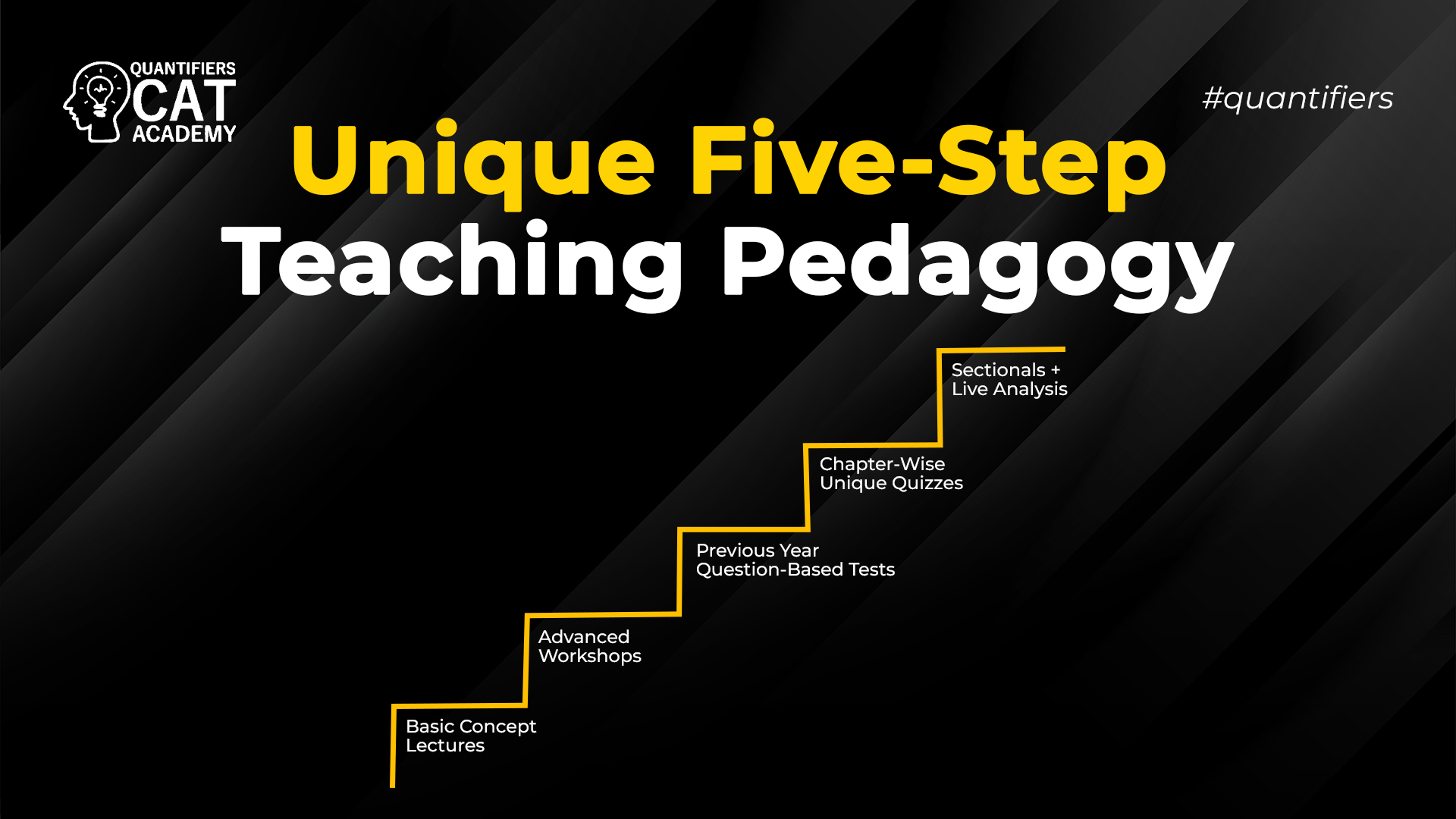
Your MBA journey doesn’t have to be confusing. At Quantifiers CAT Academy, we mentor students from the ground up—whether you’re preparing for CAT or exploring exams like SNAP, NMAT, CMAT, IIFT and MICAT. With personalised attention, proven strategies and performance-focused guidance, we help you build strong fundamentals, boost accuracy, and stay consistent throughout your preparation journey.
VARC is not your enemy.
Unstructured preparation is.
If you:
VARC will stop feeling scary—and start feeling predictable.
And once VARC clicks, your CAT percentile quietly jumps.
VARC often acts as the biggest percentile differentiator because it is hard to cram and slow to improve.
By reading daily, practicing RCs regularly, and analysing why answer options are wrong.
30–60 minutes of focused reading and practice is sufficient if done consistently.
No. CAT focuses more on comprehension and logic than advanced vocabulary.
Start with 1–2 RCs daily and increase gradually as accuracy improves.
Because CAT designs traps. Staying strictly text-based helps avoid this.
Yes, with disciplined practice—but guidance helps identify mistakes faster.
A raw score of 30–35+ is considered strong in most CAT papers.
The best VARC strategy for CAT 2026 focuses on building strong reading habits, understanding arguments, and improving answer-elimination skills rather than memorising vocabulary. Aspirants should read editorials or opinion articles daily, practice 1–2 RC passages regularly, and analyse answer options carefully to identify logical traps used in CAT. Accuracy is more important than attempting every question, so a smart strategy involves selecting 3–4 RC passages with high accuracy and attempting Verbal Ability questions selectively. Consistent mock analysis and mistake tracking help identify weak areas, making VARC more predictable and improving overall CAT percentile.
To connect with us, for mentorship and daily test practice
DM us on Instagram or WhatsApp. We reply back 24/7. Get your CAT prep started


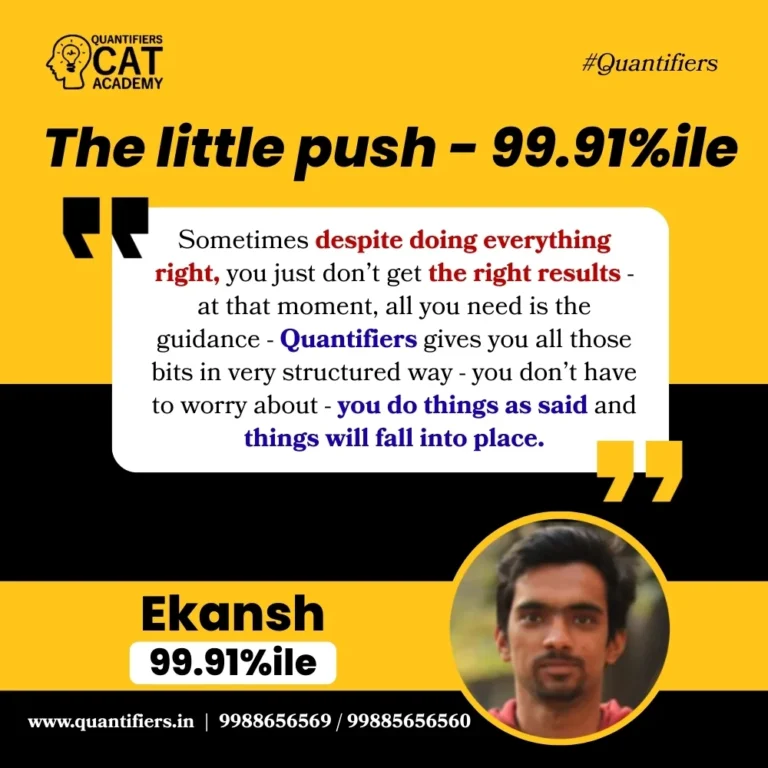
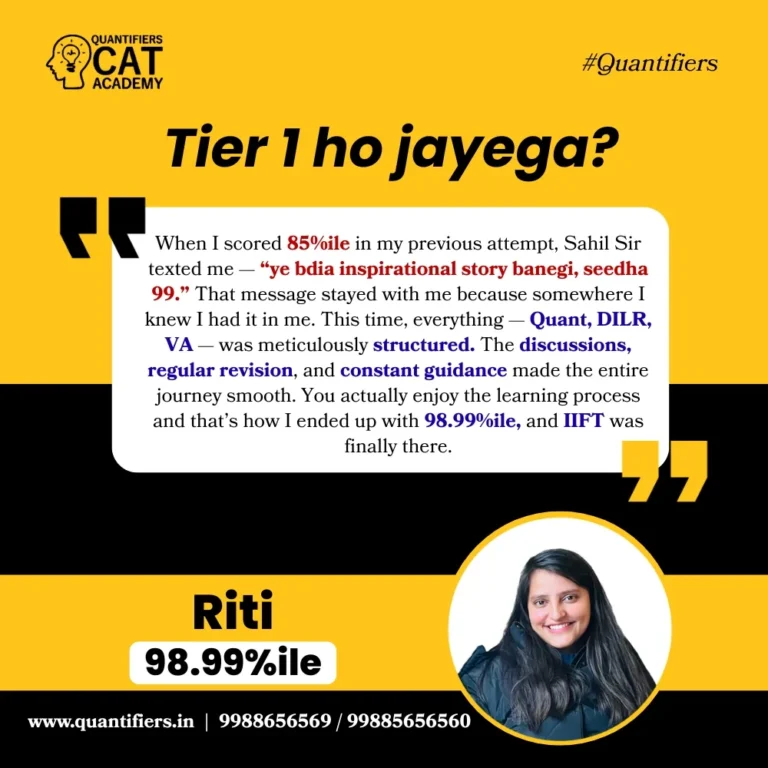
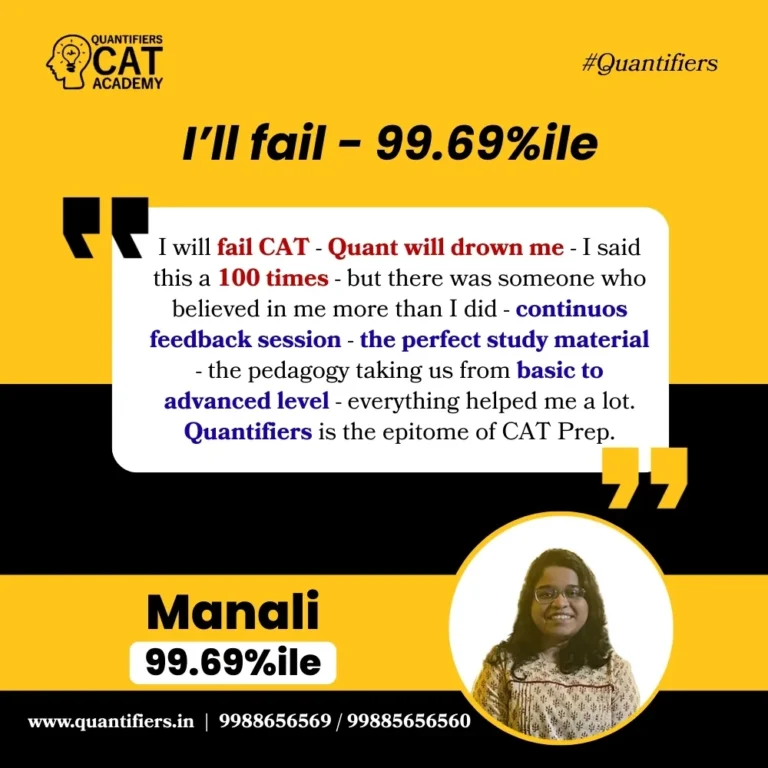
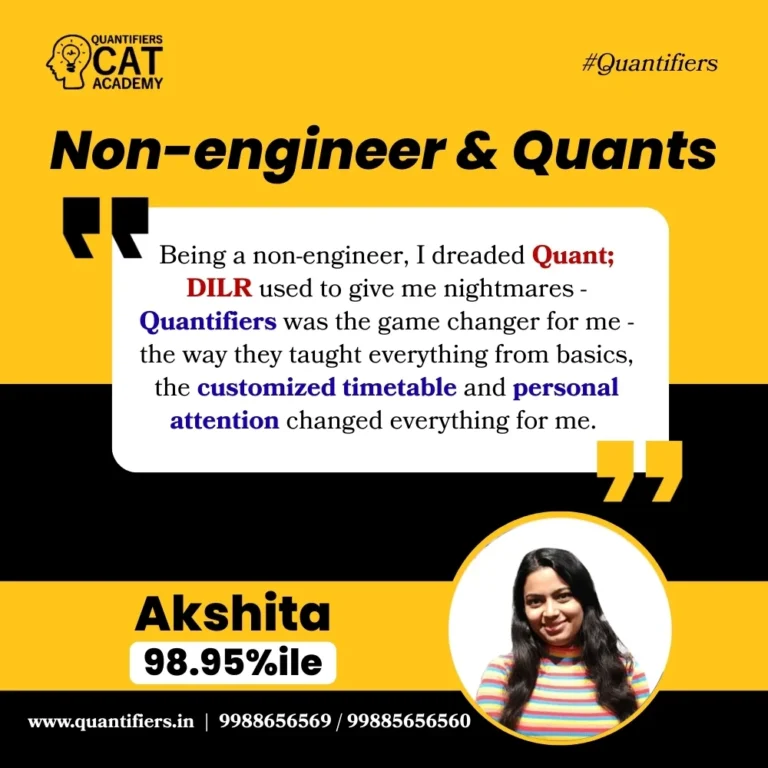
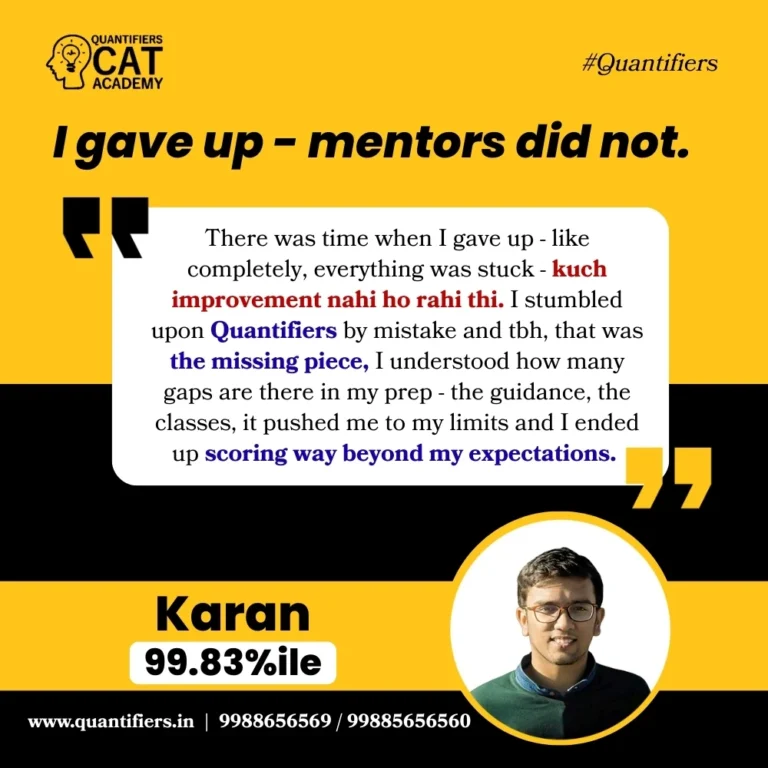

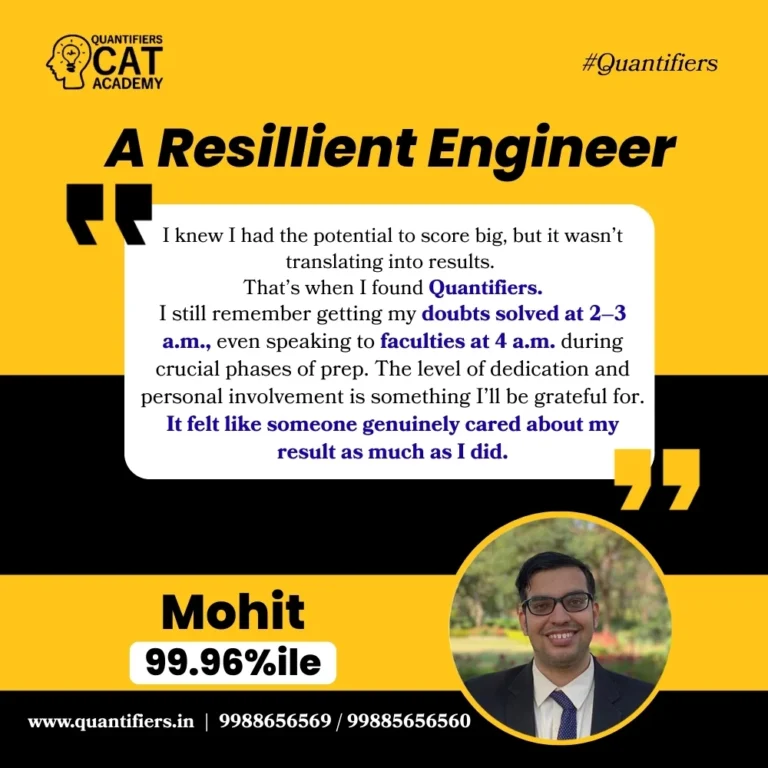
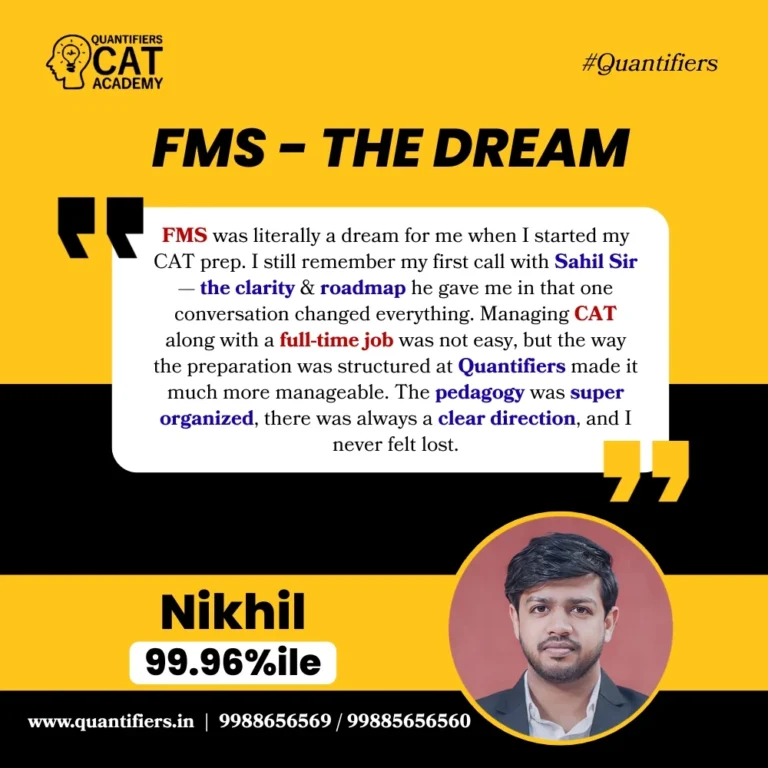
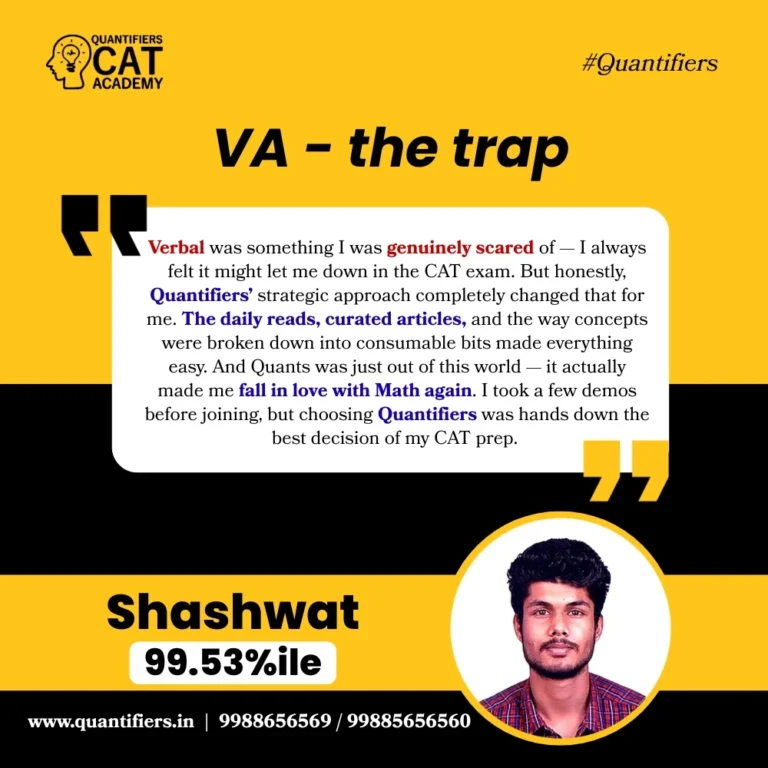






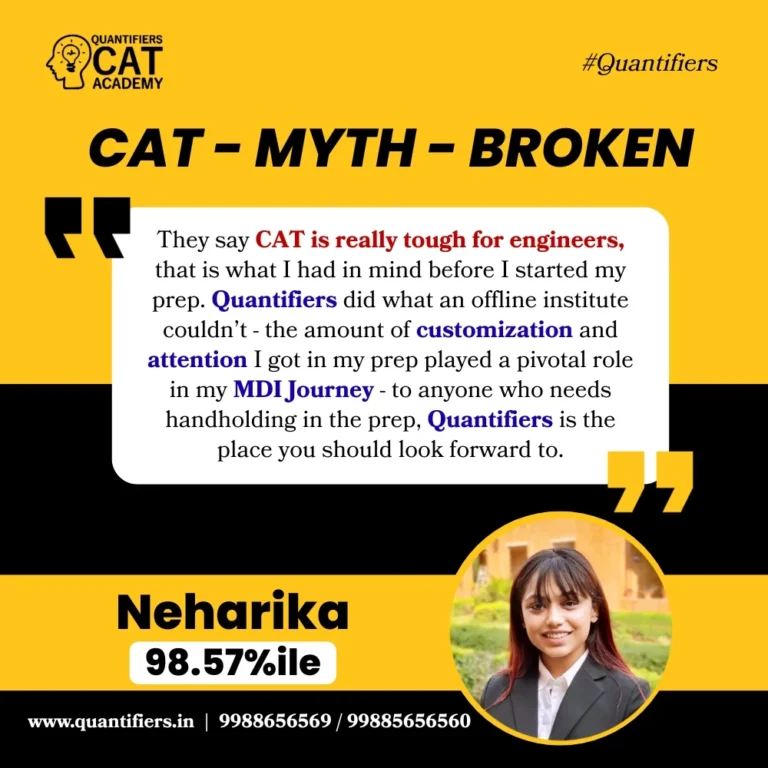





We at Quantifiers understand and deliver on the personal attention each of our students requires. Whether it is through our pedagogy that enables non-engineers or non-math background students, our constant effort to proactively provide solutions, or our focus on our student’s goals.