- Our Courses
- Video Resources
Video Resources
...
- Daily Targets
- All India Free Mocks
...
- Free Study Material
- Blogs
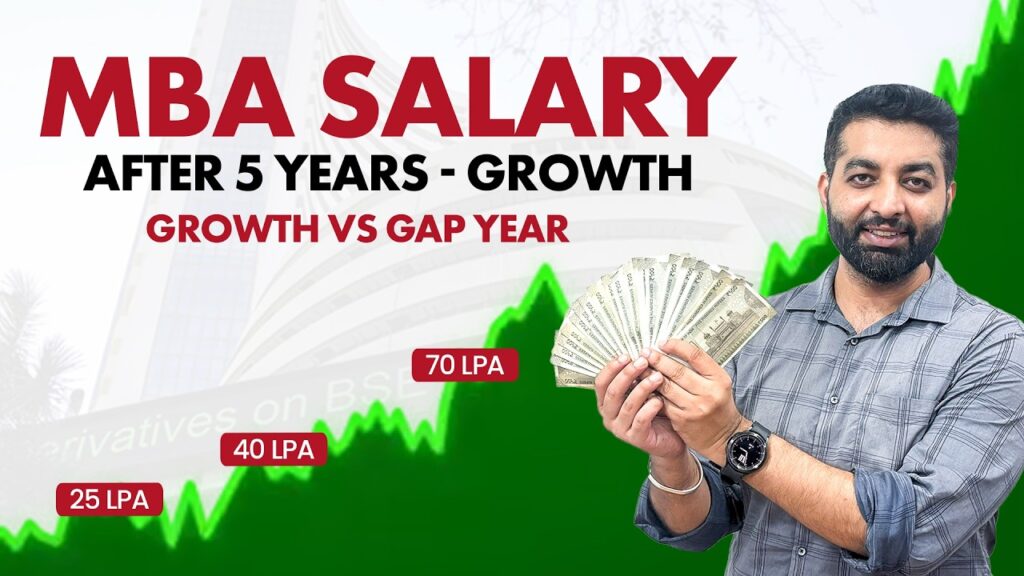
Nikhil Kamath called MBA aspirants "idiots." We disagree — with data. Here's the real ROI breakdown of an MBA in 2026 for Indian students.
Yes, an MBA is still worth it in 2026 — but only if you’re targeting the right college and have clear career goals. An IIM MBA from a top-5 campus offers an average placement of ₹32–35 LPA with a fee of ₹24–27 lakh, meaning most graduates break even within 1–2 years. Nikhil Kamath’s “MBA is stupid” remark was attention-grabbing but context-free — the ROI of an MBA depends almost entirely on which college you attend, what sector you enter, and whether you actually know why you want one. For a student from a non-metro background with limited networks, a degree from a strong B-school can still be the single biggest career accelerator available. The answer isn’t “yes” or “no” — it’s “yes, from the right place, for the right reasons.”
We hope you find this blog informational. If you want a FREE DEMO, click here.

Quantifiers CAT Academy, Chandigarh
November 2025. Zerodha’s Nikhil Kamath is in a YouTube AMA celebrating the company’s 15th anniversary when he drops this gem: “In my personal opinion, colleges are dead. If you’re 25 and going to an MBA college today, you must be some kind of an idiot.”
The internet, predictably, lost its mind.
One side nodded furiously and posted threads about “skills > degrees.” The other side — including an NYU Stern MBA student who clapped back on Instagram — pointed out that, hey, it’s easy to say “college is dead” when you grew up in a Tier-1 city with the networks, capital, and risk appetite to build a billion-dollar company from scratch. Not everyone has that.
Here at Quantifiers CAT Academy, we prep students every day who are working toward CAT 2026 — some freshers, some working professionals — all with one shared question lurking in the back of their minds after that viral clip: Is an MBA even worth it anymore?
Let’s actually answer that. With numbers. Without the noise.
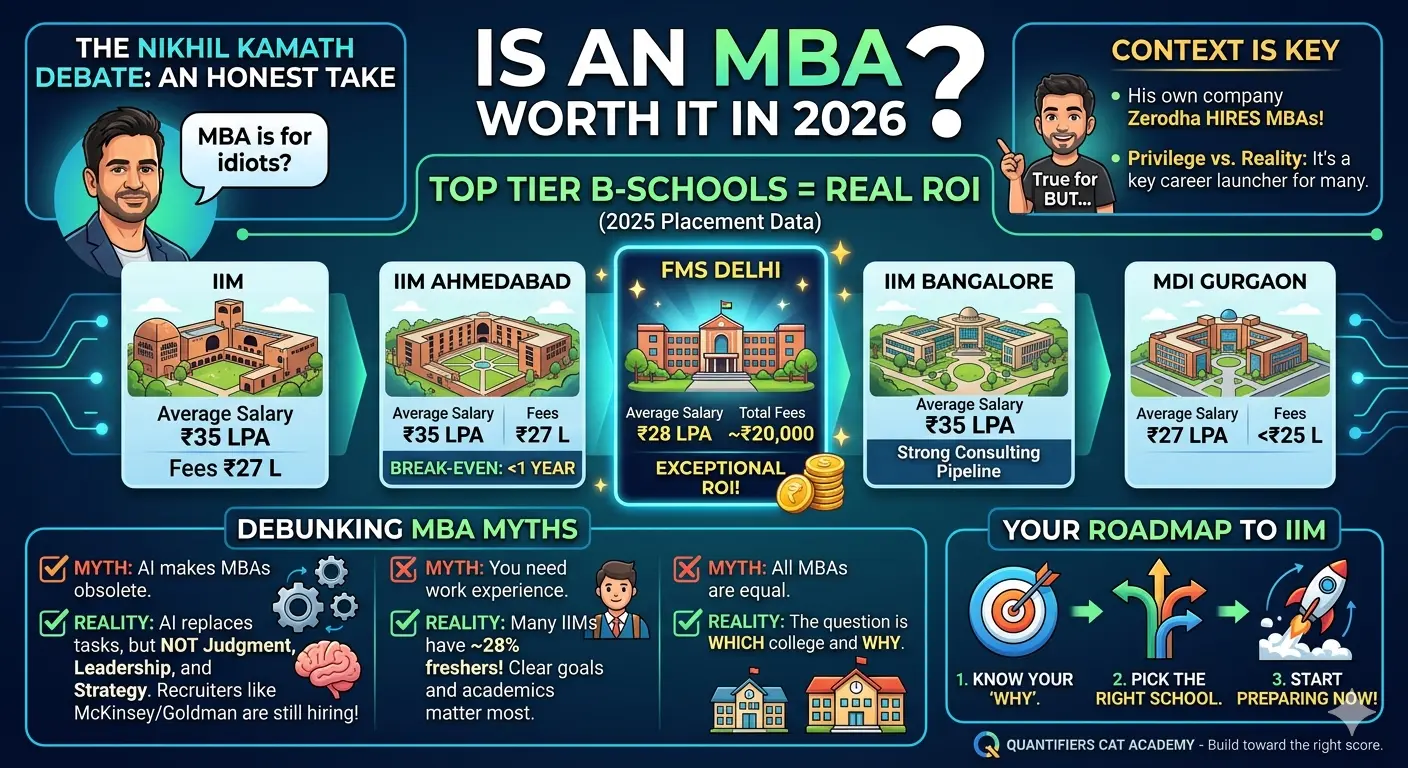
Nikhil Kamath called MBA aspirants idiots. He was wrong — but not entirely. Context matters.
Top IIM placements hit ₹32–35 LPA average in 2025. The numbers still make sense at the right college.
FMS Delhi is criminally underrated — ₹28 LPA average with ₹20,000 in fees. That's elite ROI.
The MBA question isn't "is it worth it" — it's "which college and why." That's the real question.
CAT 2026 is your entry ticket. If you know the "why," start the "how" now.
He’s not entirely wrong. Here’s where he has a point:
If you’re joining a random Tier-3 B-school for ₹15–20 lakh in fees and walking out to a ₹6–8 LPA package, you haven’t invested in your future. You’ve taken on debt and delayed it. That math doesn’t work, and it never has.
He’s also right that in 2026, for someone with genuine entrepreneurial clarity, strong skills, and existing networks — an MBA might genuinely not be the highest-ROI move. The startup ecosystem, GCCs (Global Capability Centres), and the sheer availability of online learning have opened doors that previously required an MBA to unlock.
So yes, the blanket “go do an MBA” advice? Outdated.
But here’s where Kamath’s statement falls apart spectacularly.
💡 If you need a structured plan to jump from 85 to 92+, check out Quantifiers CAT Academy’s free study material — it’s free, it’s good, and it exists specifically so you don’t have to wing it.

Consistency plays a crucial role in CAT 2026 preparation. To help aspirants stay disciplined and exam-ready, we post daily study targets covering Quant, DILR, and VARC practice.
One, he’s speaking from the top of the privilege pyramid. Starting a company without a degree is significantly easier when you already have access to capital, mentors, and a ready network. For a first-generation professional from a Tier-2 city — an MBA from a good B-school isn’t a luxury. It’s a network, a credential, and a career launchpad all in one.
Two — and this is the part most people missed — Zerodha hires MBAs. Extensively. You can’t build a company telling people degrees are useless while simultaneously recruiting from campus. The irony wasn’t lost on the internet either.
Three, the numbers still work. And numbers don’t lie.
Here’s what the 2025 placement season actually looked like:
Average package ~₹35 LPA | Fees: ₹27 lakh Break-even from salary difference alone: under 12 months.
Average ~₹35 LPA | Fees: ₹26 lakh One of the strongest consulting pipelines in Asia.
~₹35 LPA average | Fees: ₹27 lakh Highest domestic package this season: ₹1.15 crore.
~₹32 LPA | Fees: ₹20 lakh 100% placement. Solid, consistent, reliable.
arguably the single best ROI MBA in India: ~₹28 LPA average placements. Total fees? Roughly ₹20,000. That’s not a typo.
₹25–30 LPA range, with fees under ₹25 lakh.
₹15–22 LPA average | ₹20–25 lakh fees. ROI takes 2–3 years, but still positive.
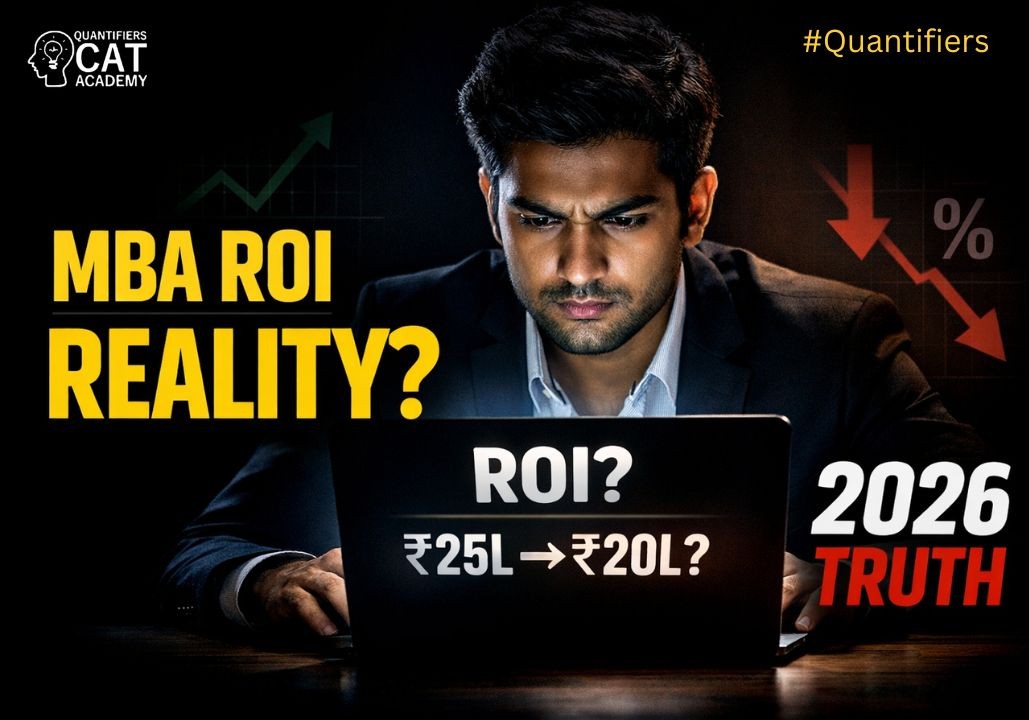
Now look at one CA’s story that went viral right after Kamath’s comment: She joined an MBA in 2019 with a pre-MBA salary of ₹8 LPA. By 2025, she was earning ₹21 LPA. Her analysis? She’s still ₹25 lakh short of breaking even and expects to recover the full investment by 2028. That’s a 9-year ROI on a premium MBA.
And that, honestly, is the real conversation — not “IIM or nothing,” but which MBA, at which cost, for what outcome.
💡 Want to figure out which colleges make sense for your profile and target? Start with the fundamentals — Quantifiers’ free CAT 2026 resources are designed to help you build toward the right score for the right school.
Let’s cut through the theory with a simple breakdown:

Here’s the thing about an IIM degree that salary data can’t fully capture: the alumni network is generational.
The people you study with, eat with, argue about case studies with at 2am — they become the founders, VCs, CMOs, and CFOs of the next decade. That network has no price tag. One introduction from an IIM batchmate can be worth more than 10 years of cold outreach on LinkedIn.
This is especially true for people breaking into industries like consulting, private equity, and venture capital — sectors where who you know is almost as important as what you know. And it’s one of the reasons why IIM placements keep delivering year after year, regardless of what’s happening in the job market.
Is that network worth ₹27 lakh and 2 years? For a lot of people — yes.
This one comes up on Reddit constantly. And it’s a fair question.
AI is absolutely changing what skills are valuable. Routine analysis, basic financial modelling, entry-level marketing tasks — yes, AI is disrupting those. But here’s what AI isn’t replacing: judgment, stakeholder management, navigating organisational politics, leading diverse teams, and making calls in ambiguous situations with incomplete data. Those are exactly what an MBA, done right, trains you for.
The companies using AI most aggressively? They’re still hiring from IIM campuses. Accenture, McKinsey, Goldman Sachs, Amazon — all showed up in force during IIM placements 2025. The degree isn’t dead. But the passive “my degree will do the work” mindset? That is.

Which MBA, from which college, for which goal, at what cost?
If your answer is “any MBA, somewhere decent” — that’s where you need to pause and think harder. The MBA-as-safety-net play has a shrinking payoff.
And if you’re sitting in Chandigarh, or Jaipur, or Bhopal wondering if this is even for you — it can be. The best CAT coaching in Chandigarh, the best online CAT coaching across the country — all of it exists to help you earn access to those top institutions. The system is competitive but it isn’t closed.
💡 If you’ve made up your mind that an IIM-level MBA is the goal — here’s everything you need to know about CAT 2026 — exam dates, pattern, eligibility, and strategy. Bookmark it.
He’s a self-made billionaire who dropped out and built something extraordinary. His perspective is valid — for people like him.
But most of us are not Nikhil Kamath. Most of us don’t have the networks, the capital, or the risk appetite of a startup founder at 21. For the majority of 22–25 year olds in India trying to break into a high-growth career, change industries, or accelerate into a leadership role — a well-chosen MBA from a genuinely strong institution is still one of the highest-ROI decisions available.
The idiots aren’t the ones doing MBAs. The idiots are the ones doing MBAs without knowing why.
Know your “why.” Pick the right school. Prepare like you mean it.
That’s the whole game.

Discover the most complete list of free resources for CAT 2026 — from free CAT mock tests and CAT previous year questions to DILR sets, VARC practice, quant formula book, and GDPI handbooks. All curated by Quantifiers. All free. All updated.
Yes, for top-5 IIMs. With average placements of ₹32–35 LPA and fees of ₹24–27 lakh, the break-even typically happens within 1–2 years. The ROI is among the highest of any postgraduate degree in India.
Partially. He's right that an MBA from a low-ROI college with high fees and poor placements isn't smart. He's wrong to apply that to all MBAs — the data from top IIMs and schools like FMS Delhi tells a very different story.
It depends heavily on the college. IIM ABC graduates average ₹32–35 LPA. Newer IIMs offer ₹15–22 LPA. Tier-2 schools like IMT and IMI offer ₹10–18 LPA. Tier-3 schools can drop to ₹6–10 LPA — where the ROI becomes questionable.
For pure ROI — arguably yes. FMS charges roughly ₹20,000 in total fees with average placements around ₹28 LPA. No IIM can match that fee-to-placement ratio. It's consistently one of India's best MBA investments.
Not for top-school graduates. AI is replacing routine analytical tasks, but the judgment, leadership, stakeholder management, and network-building that a strong MBA provides remain highly valued. Top recruiters including McKinsey and Goldman Sachs still actively recruit from IIM campuses.
Yes — many IIMs have high proportions of freshers (IIM Ahmedabad has ~28% freshers). For freshers, strong academics and a clear career goal matter more. Work experience becomes more valuable if you're targeting senior lateral placements.
In order of ROI: FMS Delhi (exceptional), IIM Ahmedabad, IIM Bangalore, IIM Calcutta, MDI Gurgaon, SPJIMR Mumbai, IIM Lucknow, XLRI Jamshedpur. Beyond these, ROI depends heavily on fee structure and placement consistency.
For engineers looking to move into consulting, product management, or business roles — yes. An MBA from a strong B-school is still the most efficient way to make that transition. Engineers dominate IIM batches precisely because the engineering-to-MBA pipeline delivers strong career outcomes.
The primary entry route is CAT (Common Admission Test), followed by WAT-PI rounds. A strong CAT score (90–99+ percentile depending on target school), good academics, and clear career goals are the key ingredients. CAT 2026 prep should ideally start 8–10 months before the exam.
For top-tier executive MBA programs from IIMs or ISB — yes, especially for working professionals. For generic online MBAs from unknown institutions — the ROI is very poor. The network and brand value of where you study matter enormously.
Indian IIM MBAs offer lower cost (₹24–27 lakh vs ₹60–1 crore+ for US/UK programs) with faster break-even. US/UK MBAs offer global brand value and higher absolute salary potential. For domestic careers, an IIM MBA is the more efficient choice.
Start with understanding the exam pattern, identifying your weak sections (VARC, DILR, or QA), and building consistent study habits. Structured mentorship from a strong online CAT coaching platform accelerates this significantly — the difference between 90 and 99 percentile is strategy, not just effort.
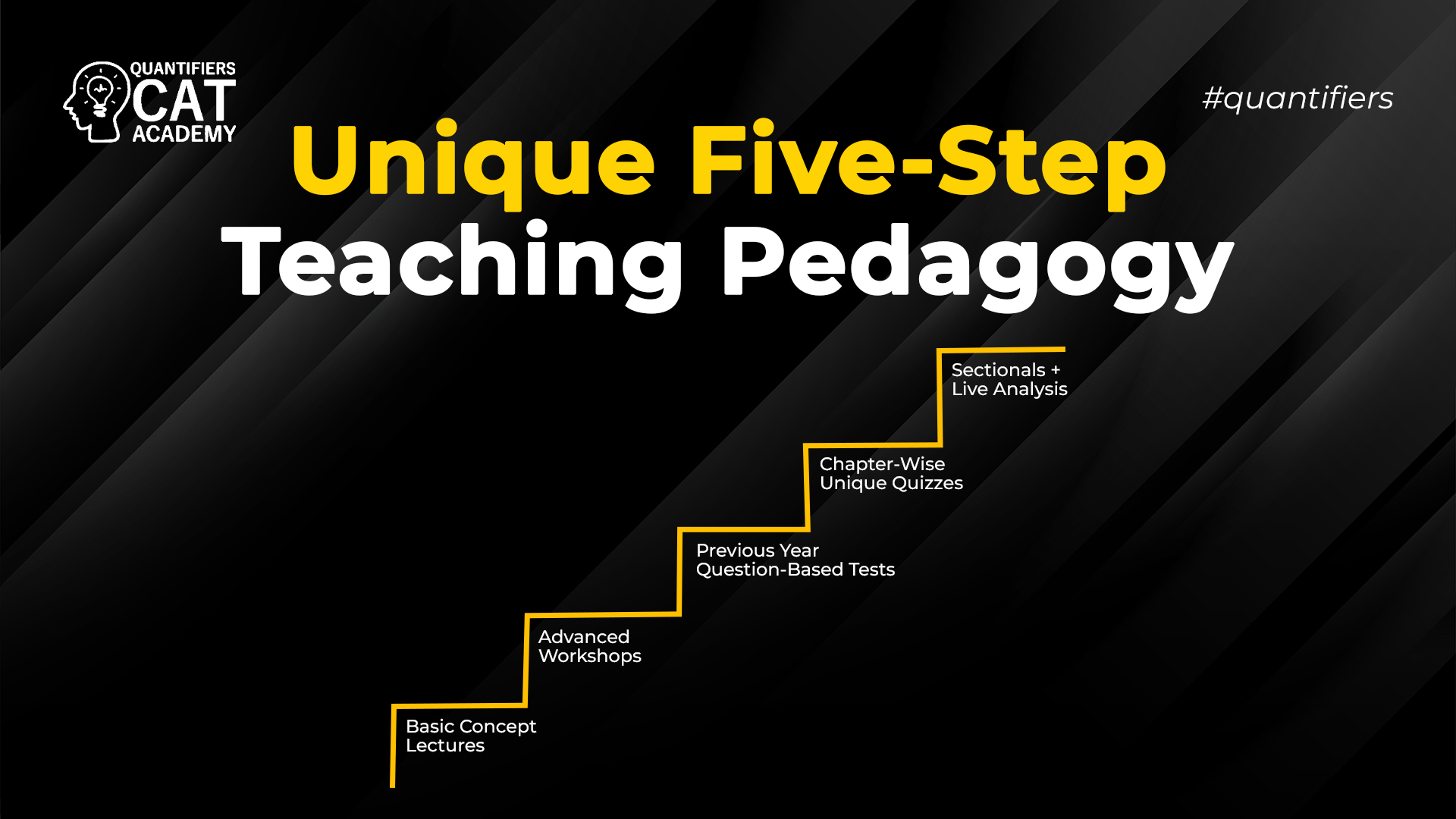
Written by Quantifiers CAT Academy — among the best online CAT coaching platforms in India, built for students who want more than just content. We offer structured 5-step pedagogy, 24×7 mentorship, and free resources because we believe the path to a great MBA shouldn’t start behind a paywall.
Your MBA journey doesn’t have to be confusing. At Quantifiers CAT Academy, we mentor students from the ground up—whether you’re preparing for CAT or exploring exams like SNAP, NMAT, CMAT, IIFT and MICAT. With personalised attention, proven strategies and performance-focused guidance, we help you build strong fundamentals, boost accuracy, and stay consistent throughout your preparation journey.
An MBA from a top-tier Indian B-school (IIM ABC, FMS, MDI, XLRI) offers strong ROI in 2026, with average placements of ₹25–35 LPA against fees of ₹20–27 lakh. For most graduates from these schools, the break-even point comes within 1–2 years of graduating.
Key Data Points (2025 Placement Season):
When MBA is worth it: You have a clear career goal (consulting, finance, marketing leadership), you’re targeting a college where placements justify the fee, and you can articulate why you want the degree.
When MBA may NOT be worth it: You’re joining a Tier-3 college with ₹15–20 lakh fees and ₹6–8 LPA placements, or you have no idea why you want an MBA beyond “good salary.”
Nikhil Kamath’s comment — “If you’re 25 and going for an MBA, you must be some kind of idiot” — was made from the perspective of entrepreneurship culture, where skills > credentials. Valid in some contexts, but doesn’t reflect the reality for the majority of Indian job seekers who use an MBA to accelerate corporate careers, switch industries, or build networks they couldn’t access otherwise.
To connect with us, for mentorship and daily test practice
DM us on Instagram or WhatsApp. We reply back 24/7. Get your CAT prep started
Quantifiers CAT Academy has helped students across India — from metros to Tier-2 cities — crack CAT and earn seats at India’s best B-schools. Whether you’re in Mumbai, Bengaluru, or looking for the best CAT coaching in Chandigarh, we’re accessible 24×7, completely online, and genuinely invested in getting you there.


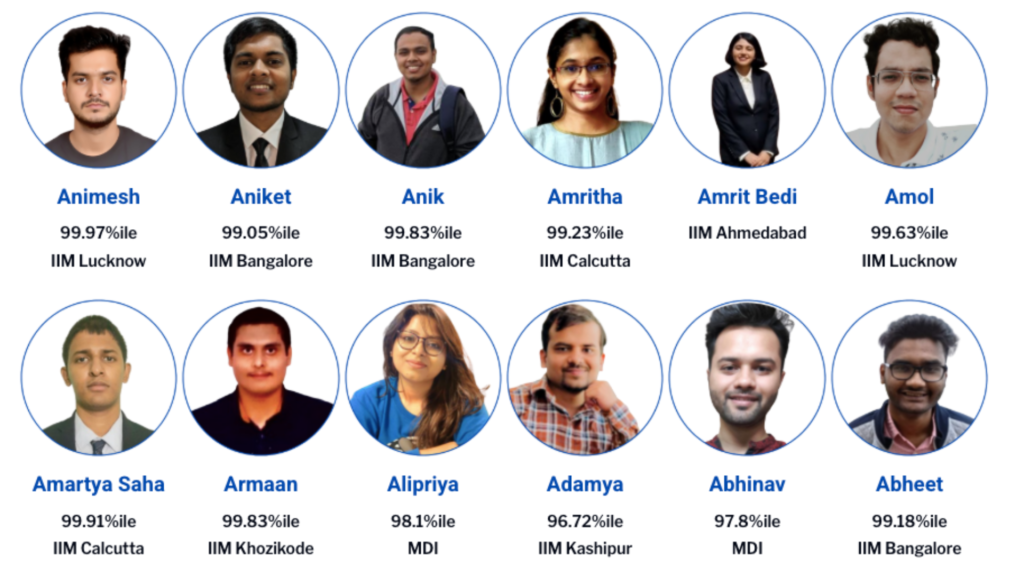
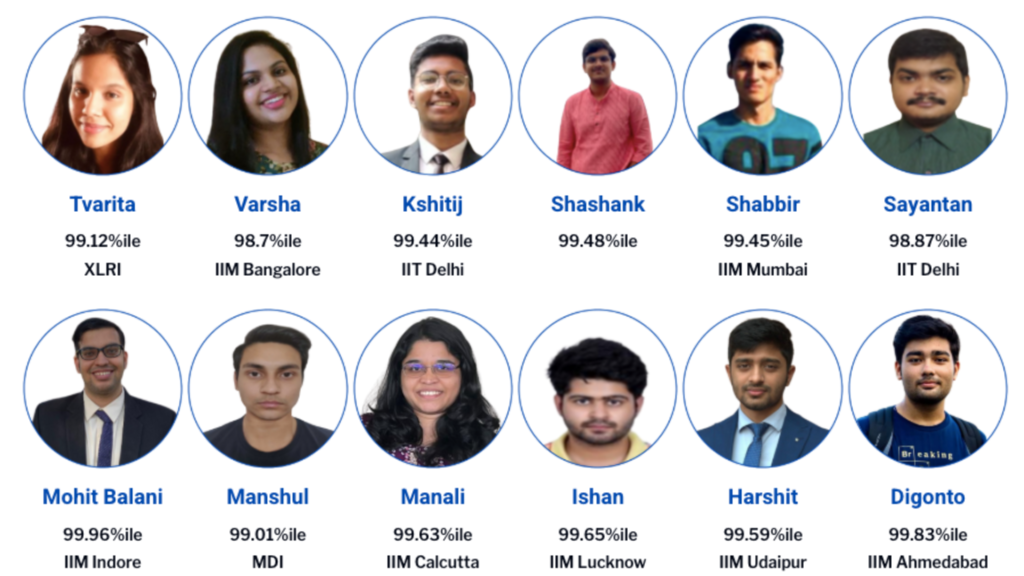
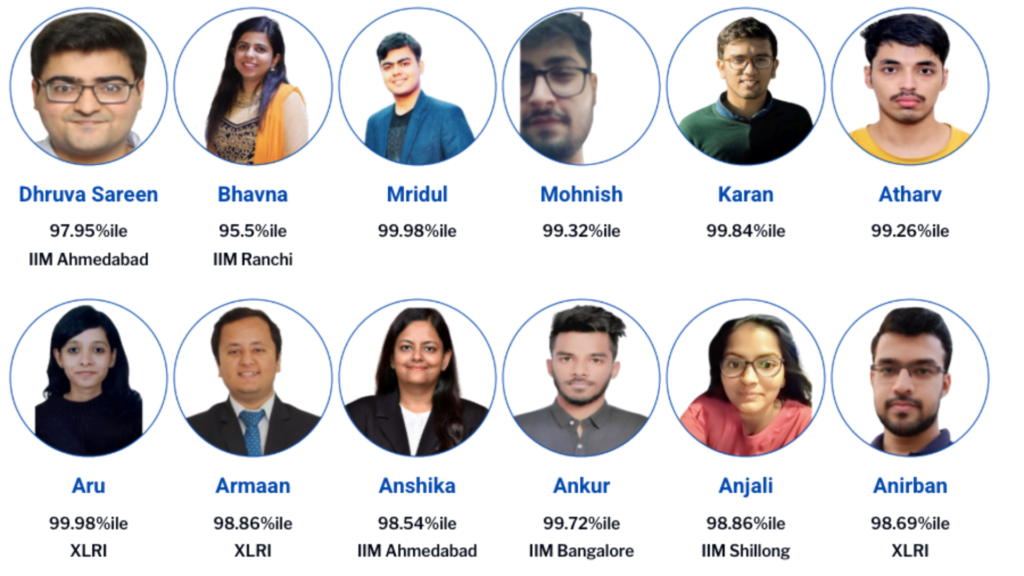
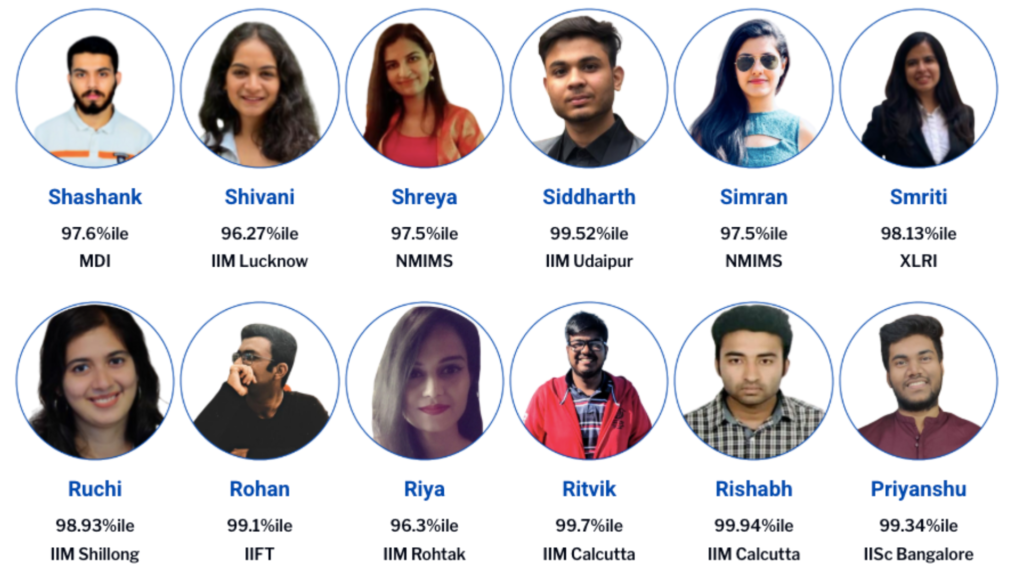
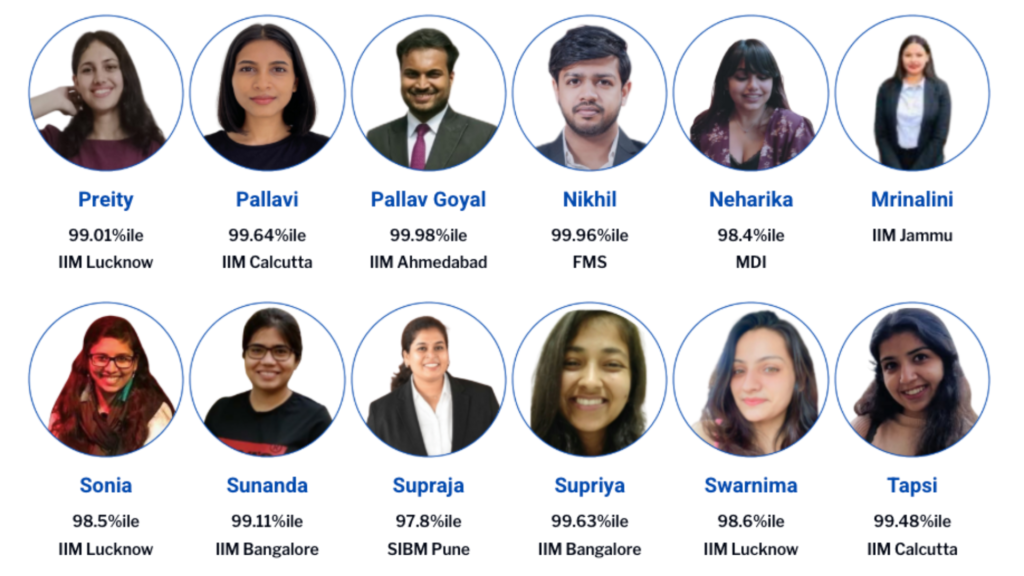

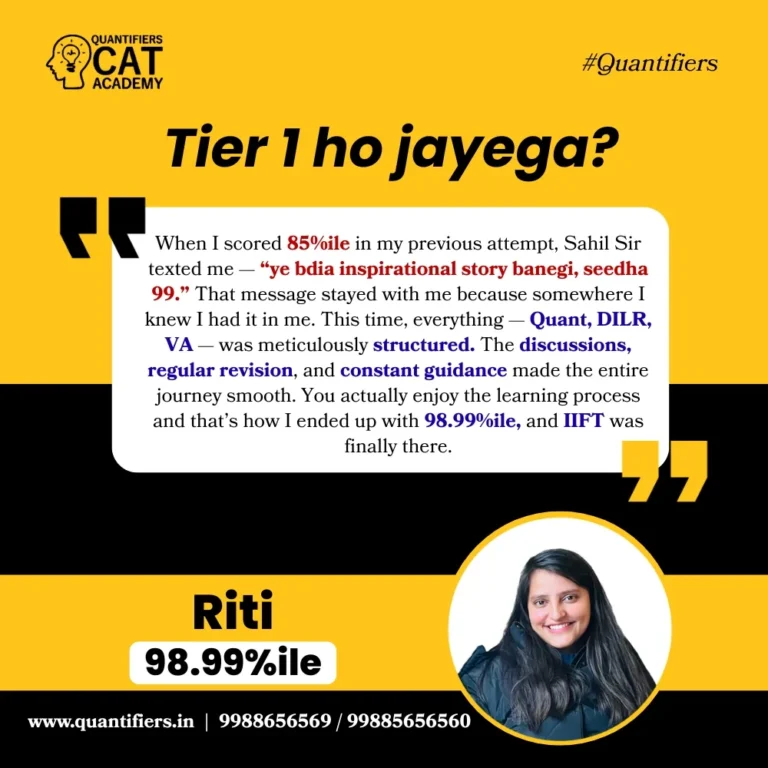


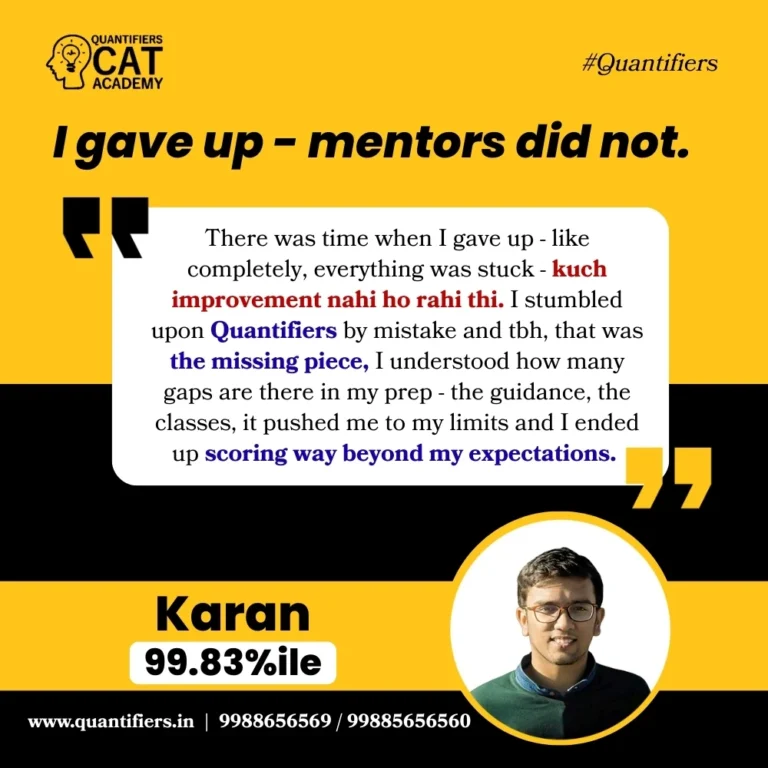
















We at Quantifiers understand and deliver on the personal attention each of our students requires. Whether it is through our pedagogy that enables non-engineers or non-math background students, our constant effort to proactively provide solutions, or our focus on our student’s goals.